menu

Grease Trap Cleaning & Pumping in Hartford | Minimize Downtime and Ensure Full Compliance

We keep your Hartford restaurant or commercial kitchen operational with fast grease interceptor cleaning, scheduled pumping, and complete waste removal that meets Connecticut Department of Energy and Environmental Protection standards.

Slider Image 1
Slider Image 2
Slider Image 3
Slider Image 4
Slider Image 5
Slider Image 7
Slider Image 8
Slider Image 9
Slider Image 10
Slider Image 11

Why Hartford Food Service Operations Cannot Afford Grease Trap Failures

Your commercial kitchen operates on tight margins. A single grease trap backup shuts down your entire operation, costs you revenue, and triggers emergency plumbing calls that run into thousands of dollars. In Hartford, the combination of aging commercial sewer infrastructure in districts like Downtown and Parkville, plus strict Connecticut FOG (Fats, Oils, Grease) discharge regulations, means you face pressure from two directions.

Hartford Health Department inspectors enforce pumping frequency based on interceptor size and kitchen volume. Miss a scheduled service, and you risk violation notices that halt operations until you achieve compliance. The city's older clay pipe networks in neighborhoods around Asylum Hill cannot handle grease overflows the way modern PVC systems can. When your grease trap reaches capacity, the solidified waste does not just back up into your kitchen. It migrates into the municipal line, creating liability that extends beyond your property line.

Restaurant grease trap service is not optional maintenance. Commercial grease trap pumping directly impacts your ability to pass health inspections, maintain your Connecticut food service license, and avoid costly emergency shutdowns during peak service hours. Every day your interceptor operates past capacity, you accumulate FOG buildup that reduces trap efficiency and increases the risk of complete system failure. Grease trap cleanout becomes exponentially more difficult when solidified waste hardens in the baffles and inlet pipes.

Hartford's food service sector depends on predictable operations. Grease interceptor cleaning protects that predictability by preventing the cascade of failures that begin with a neglected trap and end with lost revenue, regulatory fines, and reputational damage.

Why Hartford Food Service Operations Cannot Afford Grease Trap Failures
How Professional Grease Trap Waste Removal Protects Your Business Continuity

How Professional Grease Trap Waste Removal Protects Your Business Continuity

Commercial grease trap pumping requires specialized vacuum trucks, proper waste manifesting, and coordination with licensed disposal facilities. You cannot simply pump a grease interceptor into a standard septic truck. The waste stream contains high levels of FOG that require processing at facilities equipped to separate and recycle the material according to Connecticut environmental regulations.

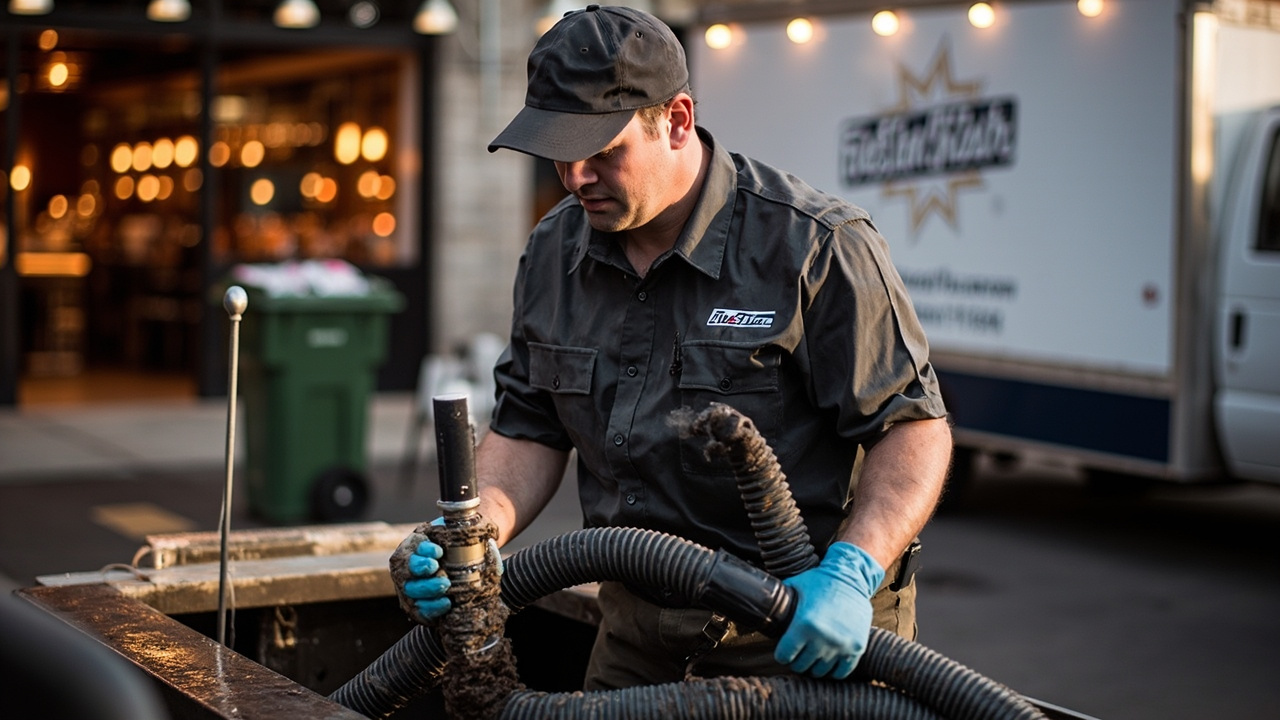
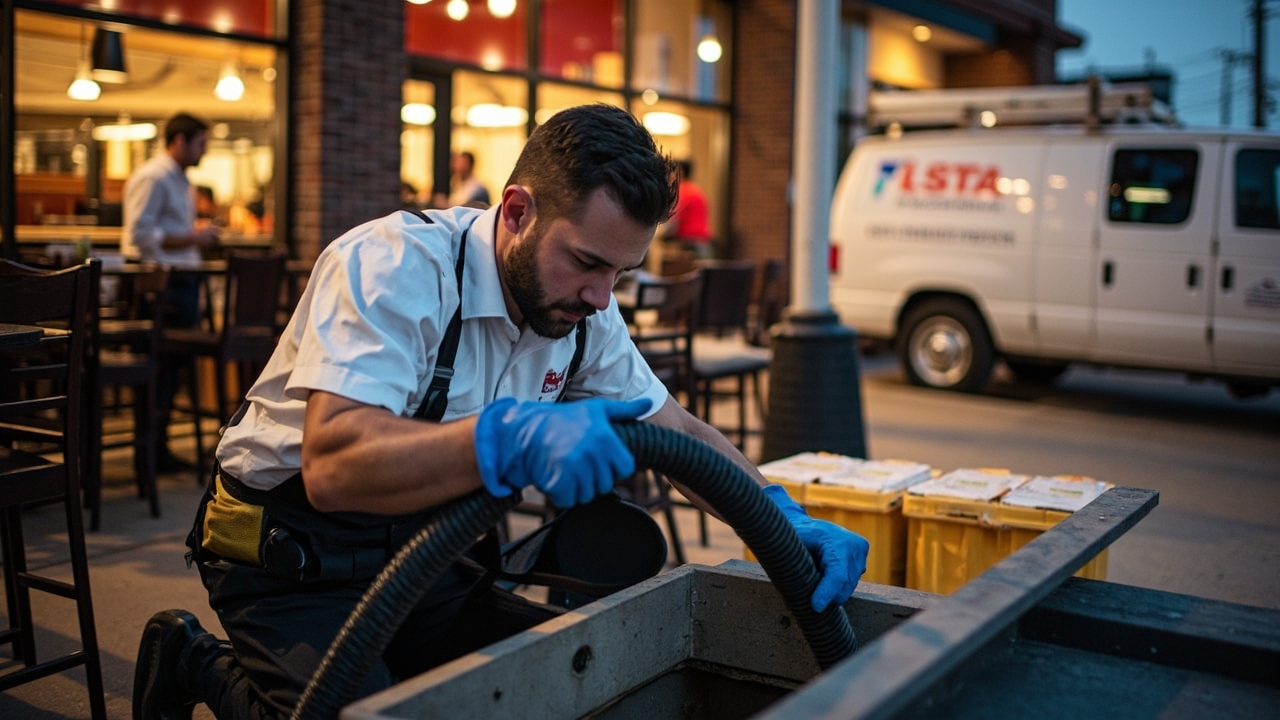
Our process begins with hydro-jetting the inlet and outlet baffles to break up hardened grease deposits that standard pumping cannot remove. We then vacuum the entire trap, removing both liquid and solid waste layers. The baffle inspection identifies structural issues like cracked walls, deteriorating gaskets, or damaged flow restrictors that compromise trap efficiency. We document the waste volume, which provides the data you need to optimize your pumping schedule and avoid both under-servicing and unnecessary service calls.

Grease trap cleanout includes scraping the sidewalls and bottom to remove the adhered FOG layer that reduces effective trap volume. This step is where most low-cost services cut corners. They pump the liquid layer and leave the solidified waste, which means your trap fills faster and requires more frequent service. We remove 100 percent of the waste, then flush the system to verify proper flow rates through the inlet and outlet piping.

Restaurant grease trap service scheduling depends on your kitchen volume, menu type, and interceptor size. A breakfast-focused diner generates different waste than a high-volume fryer operation. We calculate your accumulation rate during the first service, then build a maintenance schedule that keeps you compliant without paying for premature pumping. The goal is maximum intervals between services while maintaining full regulatory compliance and zero operational disruptions.

What Happens During Your Scheduled Grease Interceptor Service

Grease Trap Cleaning & Pumping in Hartford | Minimize Downtime and Ensure Full Compliance
01

Pre-Service Inspection and Access

We locate and open your grease trap, whether it is an exterior in-ground interceptor or an interior under-sink unit. The technician measures current waste levels, checks for visible damage to the lid and frame, and photographs the conditions before pumping begins. This documentation protects you during health inspections and provides a baseline for tracking accumulation rates between services.
02

Complete Waste Extraction

Using industrial vacuum equipment, we remove all liquid and solid waste from the trap. High-pressure water jets break up hardened deposits on the baffles and sidewalls. We scrape the bottom and corners where FOG accumulates in layers that standard pumping misses. The entire waste stream goes into a sealed tank for transport to a licensed processing facility, with full manifesting for your compliance records.
03

System Testing and Documentation

After waste removal, we test water flow through the trap to confirm proper operation. The technician inspects baffles, gaskets, and flow restrictors for damage or wear. You receive a service report documenting the waste volume removed, the condition of all components, and the recommended date for your next service. This report satisfies Hartford Health Department requirements and provides the documentation you need for your internal compliance files.

Why Hartford Commercial Kitchens Choose Five Star Plumbing Hartford

We understand Connecticut FOG regulations because we work with them every day. Our technicians know the specific requirements Hartford Health Department inspectors enforce, the documentation you need to maintain compliance, and the pumping frequencies that satisfy both regulatory standards and operational efficiency. When you work with a provider that serves multiple states, you get generic service built around the lowest common denominator. We build our service around Connecticut's specific requirements.

Hartford's commercial district includes everything from food trucks with small under-sink traps to hotel kitchens with 2000-gallon interceptors. We service the full range, with equipment sized for your specific installation. Our vacuum trucks access tight urban locations in neighborhoods like Frog Hollow and Barry Square where larger regional providers cannot maneuver. We schedule services during your off-hours to avoid disrupting lunch or dinner service, and we work with your staff to minimize kitchen access interruptions.

The relationship between pumping frequency and trap efficiency is not linear. Waiting until your trap is completely full does not save money. It accelerates wear on the baffles, increases the risk of overflow, and makes each service more expensive because the waste is harder to remove. We calculate the optimal interval based on your actual accumulation rate, which reduces your annual service costs while improving reliability. You get fewer emergency calls, better health inspection results, and lower total cost of ownership.

Five Star Plumbing Hartford provides the documentation you need when inspectors arrive. Our service reports include waste volume, service date, next recommended service date, and technician certification numbers. This is not extra paperwork. This is the difference between passing an inspection and shutting down until you can prove compliance.

What to Expect When You Schedule Grease Trap Service

Service Timing and Scheduling Flexibility

We schedule grease trap pumping during your slowest operational hours, typically early morning before prep begins or late night after closing. Most services take 45 to 90 minutes depending on trap size and waste volume. We provide 24-hour advance confirmation and same-day service for emergency situations where trap failure threatens immediate shutdown. For multi-location operations, we coordinate service across all your Hartford properties to simplify scheduling and maintain consistent compliance records.

Initial Assessment and Custom Service Plans

Your first service includes a complete assessment of trap size, waste accumulation rate, and kitchen discharge volume. We review your menu, fryer usage, and dishwashing practices to identify factors that accelerate FOG accumulation. This data determines your optimal pumping frequency. High-volume kitchens might need monthly service, while smaller operations can extend to quarterly schedules. We adjust the frequency based on actual performance, not generic industry averages that do not account for your specific operation.

Complete System Cleaning and Restoration

You receive complete waste removal, not just liquid pumping. Our technicians scrape and flush the entire trap, remove all solidified deposits, and restore full operational capacity. After service, your trap functions at design efficiency, which maximizes the interval before the next service is required. We leave the site clean, with lids properly secured and no waste residue in the surrounding area. Your kitchen staff sees no evidence of the service except the updated maintenance sticker on the trap lid.

Compliance Documentation and Ongoing Support

Every service generates a detailed report that documents waste volume, service date, trap condition, and next recommended service. We maintain digital records accessible online, so you have instant proof of compliance when inspectors arrive. Our system sends automatic reminders before your next service is due, preventing lapses that trigger violations. If Hartford Health Department issues change, we update your service schedule to maintain compliance without requiring action on your part.

Frequently Asked Questions

You Have Questions,
We Have Answers

How Hartford's Aging Commercial Sewer Infrastructure Increases Grease Trap Demands

Hartford's downtown commercial district sits on sewer lines installed in the early 1900s, many constructed with vitrified clay pipe that degrades when exposed to high FOG concentrations. Unlike modern PVC systems that resist grease adhesion, these older lines accumulate deposits that reduce flow capacity and increase backup risk. Your grease trap is the first line of defense against overwhelming a fragile municipal system. When your interceptor fails, the grease enters pipes that cannot handle the load, creating backups that affect multiple properties and trigger city enforcement actions. Regular grease trap cleanout protects both your operation and the shared infrastructure your business depends on.

Connecticut regulations require commercial kitchens to maintain grease interceptors sized according to fixture unit discharge rates. Hartford Health Department enforces these requirements during routine inspections and responds to neighbor complaints about sewer odors or slow drains. Choosing a local provider means working with technicians who understand the specific enforcement patterns in Hartford, the documentation inspectors expect, and the service frequencies that satisfy both regulatory requirements and operational needs. We have serviced grease traps throughout the greater Hartford metro for years, building relationships with kitchen managers who need reliability without excess cost.
Plumbing Services in The Hartford Area

We are proud to serve the entire Hartford metropolitan area and surrounding communities. Use the interactive map below to view our main service radius, or contact us directly if you are just outside the highlighted zone—we often make exceptions for clients in need. We look forward to bringing our five-star plumbing service directly to your location.

Address:
Five Star Plumbing Hartford, 100 Pearl St, Hartford, CT, 06103

Additional Services We Offer

Our news updates

Latest Articles & News from The Blogs

Protecting Your Backyard Pool Plumbing During a Brutal Hartford Winter The first hard freeze in Hartford typically hits by mid-October,…

Protecting Your Backyard Pool Plumbing During a Brutal Hartford Winter

Protecting Your Backyard Pool Plumbing During a Brutal Hartford Winter The first hard freeze in Hartford typically hits by mid-October,…

Is Upgrading to a Dual-Flush Toilet Worth It for Your Hartford Home?

Is Upgrading to a Dual-Flush Toilet Worth It for Your Hartford Home? Dual-flush toilets offer two flushing options: a half…

Fixing a Sticky Kitchen Sink Sprayer Without Calling for a Full Repair

Fixing a Sticky Kitchen Sink Sprayer Without Calling for a Full Repair Your kitchen sink sprayer sticks, sprays erratically, or…

Contact Us

Do not wait for a backup or a violation notice. Call Five Star Plumbing Hartford at (860) 743-9699 to schedule commercial grease trap pumping that keeps your kitchen compliant and operational. We provide same-week service scheduling and emergency response when you need it.