menu

Tank vs. Tankless Water Heaters in Hartford – Expert Guidance to Choose the Right System for Your Home

Compare traditional storage water heaters and on-demand tankless systems side by side with local cost factors, energy efficiency data, and Hartford-specific installation considerations to make the smartest choice for your property.

Slider Image 1
Slider Image 2
Slider Image 3
Slider Image 4
Slider Image 5
Slider Image 7
Slider Image 8
Slider Image 9
Slider Image 10
Slider Image 11

Why Hartford Homeowners Face a Critical Decision Between Tank and Tankless Systems

Hartford's variable climate creates unique challenges for water heating systems. Winter temperatures regularly drop below freezing, forcing your water heater to work harder to maintain temperature. Summer humidity peaks around 70%, which affects basement installations where most conventional water heaters live. Your choice between traditional storage tanks and instantaneous tankless units directly impacts your utility bills, available hot water during peak demand, and how much basement space you sacrifice.

The standard vs tankless water heater comparison starts with understanding your property's demands. A conventional tank system stores 40 to 80 gallons of heated water continuously, cycling on and off to maintain temperature regardless of whether you need hot water. This standby heat loss costs Hartford residents year-round. Tankless units heat water only when you open a tap, eliminating storage but requiring higher gas line capacity or electrical service upgrades that many older Hartford homes lack.

Most Hartford properties were built between 1920 and 1960, featuring galvanized or copper supply lines sized for tank systems. The flow rate demands of on-demand water heaters can expose weaknesses in aging plumbing infrastructure. Hard water from the Metropolitan District Commission water supply accelerates mineral buildup in both system types, but affects them differently. Storage tanks develop sediment layers that insulate the heating element and reduce efficiency. Tankless heat exchangers develop scale buildup that restricts flow and triggers error codes.

Your water heating decision affects daily comfort and long-term costs. Understanding how each technology performs in Hartford's specific conditions prevents expensive buyer's remorse three years into ownership.

Why Hartford Homeowners Face a Critical Decision Between Tank and Tankless Systems
How Each Water Heating Technology Actually Works in Your Home

How Each Water Heating Technology Actually Works in Your Home

Traditional storage water heaters use a simple principle. Cold water enters the bottom of an insulated tank through a dip tube. A gas burner or electric heating element warms the water to your set temperature, typically 120 to 140 degrees. Hot water rises to the top of the tank, where it exits through the hot water outlet when you open a tap. A thermostat cycles the heating element to maintain temperature. Recovery rate, measured in gallons per hour, determines how quickly the tank reheats after heavy use. A 40-gallon gas tank typically recovers at 40 to 50 gallons per hour. Electric tanks recover slower, around 20 to 25 gallons per hour.

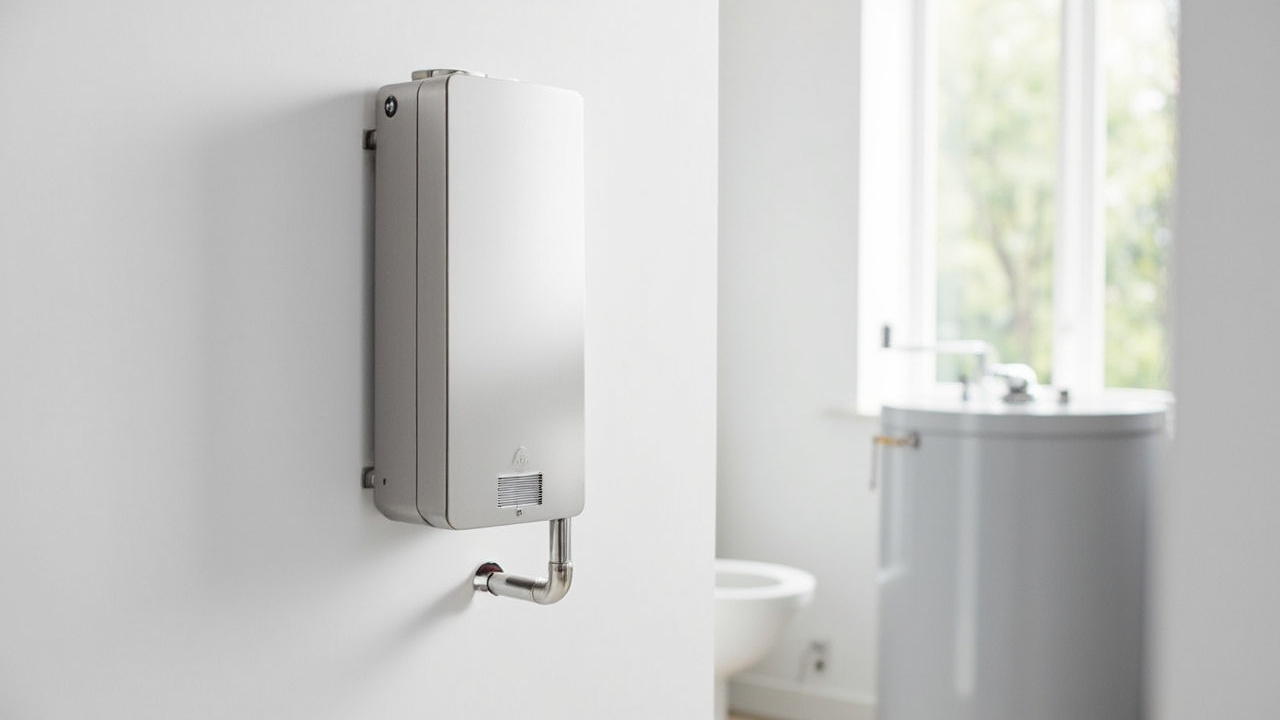
Instantaneous tankless systems operate on demand. When you open a hot water tap, a flow sensor detects movement and signals the gas valve or electric heating elements to fire. Water flows through a heat exchanger, typically copper or stainless steel, where it absorbs thermal energy. The unit modulates burner intensity or element power to maintain your target temperature regardless of flow rate, within its capacity limits. Gas tankless units require 150,000 to 200,000 BTU input for whole-house applications, compared to 40,000 BTU for conventional tanks. This demands larger gas lines, often requiring an upgrade from half-inch to three-quarter-inch supply piping.

The tank vs tankless water heater comparison hinges on flow rate versus storage capacity. A tankless unit rated at 8 gallons per minute can supply two showers simultaneously in Hartford's 50-degree groundwater. That same demand would drain a 40-gallon tank in 10 minutes, requiring a 20-minute recovery period. However, running three fixtures simultaneously may exceed the tankless unit's capacity, causing temperature fluctuations that storage tanks buffer naturally through their reserve volume.

What Happens When You Evaluate Water Heater Options

Tank vs. Tankless Water Heaters in Hartford – Expert Guidance to Choose the Right System for Your Home
01

Load Calculation Assessment

We document your household's simultaneous hot water demands by counting fixtures, appliances, and occupant patterns. A family running morning showers, dishwasher, and laundry creates different demands than empty nesters. We measure your incoming water temperature, which averages 52 degrees in Hartford winters but reaches 65 degrees in summer. This 13-degree swing affects sizing calculations because tankless units must raise water temperature further during cold months. We calculate total GPM demand and compare it against your current recovery capacity to identify whether you're undersized, oversized, or properly matched.
02

Infrastructure Compatibility Review

We inspect your gas line size, electrical panel capacity, venting configuration, and water pressure. Tankless conversions often require gas line upgrades because the higher BTU demand exceeds what half-inch lines deliver. We measure static pressure and flow rate at your main supply to ensure adequate pressure for tankless operation, which requires minimum 40 PSI under flow. We evaluate your existing venting, as tankless units require Category III stainless steel venting or PVC for condensing models, compared to the Type B venting on conventional tanks. These infrastructure factors directly impact installation costs and feasibility.
03

Lifecycle Cost Projection

We calculate total ownership costs over 15 years, including purchase price, installation modifications, energy consumption, maintenance requirements, and replacement intervals. Tankless units cost more upfront but consume 25 to 35 percent less energy in typical Hartford households. However, annual descaling service and periodic heat exchanger replacement offset some savings. We factor in your current energy rates, projected utility inflation, and realistic usage patterns to show when each technology breaks even. This projection removes the guesswork and bases your decision on actual economics rather than marketing claims.

Why Hartford Properties Require Local Water Heater Expertise

Hartford's housing stock presents unique challenges that generic water heater advice ignores. The city's historic neighborhoods feature homes with basements prone to seasonal flooding, where tank placement requires elevation or flood mitigation that affects venting runs and drainage. Properties in the South End and Frog Hollow often have shared walls or limited ventilation access, complicating tankless installations that require specific clearances and combustion air supply. Multi-family conversions, common throughout Hartford's urban core, may have undersized gas services that cannot support multiple tankless units without expensive utility company upgrades.

Local building codes require permits for water heater replacements, and inspectors focus on specific compliance points. Gas line sizing must meet Connecticut fuel gas code amendments. Expansion tanks are mandatory on closed-loop systems, which includes any property with backflow preventers or pressure-reducing valves. Temperature and pressure relief valve discharge must terminate within six inches of floor level or drain to an approved location. These requirements vary from generic national code, and compliance failures delay inspections or trigger expensive corrections.

Five Star Plumbing Hartford understands the Metropolitan District Commission water supply characteristics that affect equipment longevity. The water hardness averages 150 to 180 mg/L, moderate but sufficient to cause scaling without proper maintenance protocols. We account for this in equipment selection and recommend appropriate maintenance intervals based on actual Hartford water chemistry, not manufacturer assumptions designed for national audiences.

We have replaced hundreds of both conventional and tankless systems across Hartford's diverse housing types. This experience base lets us identify installation challenges before they occur and engineer solutions specific to your property's constraints. We do not push one technology over another. We match equipment to your actual needs, infrastructure reality, and budget parameters.

What the Water Heater Selection and Installation Process Involves

Consultation and Site Evaluation Timeline

The initial consultation takes 45 to 90 minutes, depending on property complexity. We visit your location to perform the load calculation, inspect infrastructure, and discuss your priorities. You receive a written comparison within 24 hours showing both options with transparent cost breakdowns for equipment, installation modifications, and projected operating expenses. This eliminates pressure tactics and gives you time to evaluate the numbers. If you proceed, we typically schedule installation within five to seven days for standard replacements. Emergency replacements on failed units happen within 24 hours when needed, though equipment selection may be limited to in-stock inventory.

Comprehensive Installation Assessment

Before installation begins, we verify permit approval and conduct a final walkthrough to confirm access, identify potential obstacles, and review the work plan with you. Tank installations typically complete in four to six hours. Tankless installations requiring gas line upgrades, electrical modifications, or venting changes take six to eight hours. We protect your floors and workspace, remove and dispose of the old unit according to Hartford waste management requirements, and test all connections under pressure before we leave. Every installation includes a full system demonstration where we explain controls, maintenance requirements, and what warning signs indicate service needs.

Performance Verification and Documentation

We do not consider the job complete until the system performs to specification. For tank systems, we verify proper draft through the flue, check for gas leaks at all connections using electronic detection, confirm temperature and pressure relief valve operation, and validate thermostat accuracy. For tankless units, we confirm flow rate triggers proper ignition, verify temperature stability under varying demand, check for error codes, and validate venting integrity. You receive documentation showing installation date, equipment serial numbers, warranty registration confirmation, recommended maintenance schedule, and our service contact information. This documentation matters for warranty claims and future service history.

Ongoing Maintenance and Service Access

Tank water heaters require annual inspections focusing on anode rod condition, sediment accumulation, and temperature-pressure relief valve function. Tankless systems require annual descaling to remove mineral deposits from the heat exchanger, a service that takes 90 minutes and significantly extends equipment life. We offer maintenance agreements that schedule these services automatically and provide priority response if problems develop. Both system types benefit from water softening in Hartford's moderate-hardness supply, which we can integrate during installation or add later. Access to parts and qualified service matters more than initial price, because water heater failures happen without warning and affect daily living immediately.

Frequently Asked Questions

You Have Questions,
We Have Answers

What is better, a tankless water heater or a tank? +

Neither is universally better. It depends on your household needs in Hartford. Tank water heaters cost less upfront and work well for families with predictable hot water usage. Tankless units deliver endless hot water and save space, but require higher initial investment and sometimes electrical upgrades in older Hartford homes. For a household of four or more with simultaneous showers and appliances, a tank often makes sense. For smaller homes or energy-conscious homeowners, tankless wins. Evaluate your budget, home size, and usage patterns before deciding.

What is the downside of a tankless water heater? +

The biggest downside is upfront cost. Tankless water heaters in Hartford run two to three times more than traditional tanks when you factor in installation and potential electrical panel upgrades. They also struggle during simultaneous high-demand events like running the dishwasher while two showers operate. In Hartford's hard water areas, mineral buildup requires annual descaling maintenance or your unit loses efficiency fast. Gas models need proper venting, which adds complexity in older homes. For large families, you may need multiple units to meet demand.

Why do plumbers not recommend tankless water heaters? +

Some plumbers hesitate on tankless because installation is more complex and time-consuming. Tankless units require precise gas line sizing, electrical upgrades, and venting modifications that tank installs do not. In Hartford's older housing stock, these retrofits add cost and labor. Plumbers also know that homeowners often underestimate maintenance needs. Hard water in parts of Hartford clogs heat exchangers quickly without annual flushing. Repair calls for tankless units require specialized knowledge and parts. These factors make some plumbers cautious, not because tankless is bad, but because it demands more expertise.

Are tank water heaters being phased out? +

No, tank water heaters are not being phased out. While efficiency standards have tightened, forcing manufacturers to improve insulation and burner design, tanks remain widely available and compliant. In Hartford, both tank and tankless models meet current Department of Energy regulations. New tank models use better insulation and more efficient burners than older versions. The market offers both options because each serves different needs. Tanks remain popular for their lower cost, simpler installation, and reliability in homes with high simultaneous demand. You can still buy and install a quality tank water heater.

Why do people still use tank water heaters? +

Tank water heaters cost less upfront and install easier in Hartford homes. A standard 40 or 50 gallon tank runs hundreds less than tankless, with straightforward installation that does not require electrical panel upgrades or complex venting. Tanks deliver high flow rates during peak demand, handling multiple showers and appliances simultaneously without issue. For larger families in Hartford's multi-bathroom homes, this matters. Repairs are simpler and parts are cheaper. Many homeowners prioritize predictable performance and lower initial investment over long-term energy savings, making tanks the practical choice for their situation.

How do amish get hot water? +

This question falls outside standard Hartford residential plumbing scope, but Amish communities typically use wood-fired water heating systems or on-demand heating methods that do not rely on electricity. Some use propane-powered tankless systems or gravity-fed solar heating. These methods align with off-grid living principles. For Hartford homeowners, this is not practical or relevant. If you want energy independence or backup heating during power outages, consider a direct-vent gas tankless unit that operates without electricity, or a traditional gas tank with standing pilot light. Both function during Hartford's occasional winter outages.

What is the most common problem with tankless water heaters? +

Mineral buildup from hard water is the most common problem with tankless water heaters in Hartford. Calcium and magnesium deposits accumulate inside the heat exchanger, reducing efficiency and eventually causing failure. Without annual descaling using vinegar or citric acid solution, your unit loses heating capacity and flow rate drops. Ignoring maintenance leads to expensive repairs or early replacement. Hartford's water hardness varies by neighborhood, but most areas require proactive flushing. The second most common issue is undersized units that cannot meet simultaneous demand, causing temperature fluctuations during peak usage times.

Can you run out of hot water with a tankless water heater? +

No, you cannot run out of hot water with a properly sized tankless water heater because it heats water on demand as it flows through the unit. There is no storage tank to deplete. The limitation is flow rate, not volume. If you exceed the unit's gallon-per-minute capacity by running multiple fixtures simultaneously, the water temperature drops but does not go cold. In Hartford homes, this happens when someone showers while the dishwasher and washing machine run. The solution is sizing the unit correctly for your peak demand or installing multiple units.

Can I replace my 40 gallon water heater with a tankless water heater? +

Yes, you can replace a 40 gallon tank with tankless, but it requires more than a direct swap. Hartford homes need proper gas line sizing or electrical capacity upgrades to handle tankless demand. You will need new venting that differs from your current tank setup. A qualified plumber must calculate your peak hot water demand to size the tankless unit correctly. Installation costs more than tank replacement due to these modifications. However, you gain endless hot water and reclaim floor space. Expect the project to take longer than a simple tank swap.

Is there an IRS tax credit for a tankless water heater? +

Tax credits for tankless water heaters change yearly based on federal energy efficiency programs. As of recent updates, some high-efficiency tankless models may qualify for the Energy Efficient Home Improvement Credit if they meet specific Uniform Energy Factor ratings. Check the current IRS guidelines or consult a tax professional for Hartford residents, as qualifications and credit amounts shift with new legislation. Rebates may also exist through Connecticut energy programs or your local utility provider. Verify eligibility before purchase, as not all tankless models qualify and documentation requirements are strict for claiming credits.

How Hartford's Water Chemistry and Housing Age Affect Your Water Heater Decision

The Metropolitan District Commission supplies Hartford with reservoir water that contains moderate mineral content, particularly calcium and magnesium averaging 150 to 180 parts per million. This concentration causes gradual scale accumulation in both storage and instantaneous systems but affects them differently based on operating temperature. Tankless heat exchangers operate at higher surface temperatures, accelerating mineral precipitation and reducing efficiency faster than conventional tanks. Hartford's older housing stock, particularly properties built before 1960, often has undersized electrical services between 60 and 100 amps, limiting electric tankless options to point-of-use applications rather than whole-house systems. These local factors eliminate options that work perfectly in other regions but fail in Hartford's specific conditions.

Hartford's mix of historic preservation districts and modern building codes creates compliance complexity that out-of-area contractors miss. Properties in the Asylum Hill or West End historic districts require additional permitting review when exterior venting changes affect building facades. The city's strict noise ordinances affect tankless unit placement because the combustion fan and burner ignition create operational sounds that may violate residential noise limits if units mount on shared walls. Five Star Plumbing Hartford navigates these local requirements daily, maintaining relationships with city building officials and understanding interpretation nuances that prevent project delays. We have completed successful installations across every Hartford neighborhood, from Parkville to the North End, and understand how each area's infrastructure quirks affect equipment selection and installation approach.
Plumbing Services in The Hartford Area

We are proud to serve the entire Hartford metropolitan area and surrounding communities. Use the interactive map below to view our main service radius, or contact us directly if you are just outside the highlighted zone—we often make exceptions for clients in need. We look forward to bringing our five-star plumbing service directly to your location.

Address:
Five Star Plumbing Hartford, 100 Pearl St, Hartford, CT, 06103

Additional Services We Offer

Our news updates

Latest Articles & News from The Blogs

Protecting Your Backyard Pool Plumbing During a Brutal Hartford Winter The first hard freeze in Hartford typically hits by mid-October,…

Protecting Your Backyard Pool Plumbing During a Brutal Hartford Winter

Protecting Your Backyard Pool Plumbing During a Brutal Hartford Winter The first hard freeze in Hartford typically hits by mid-October,…

Is Upgrading to a Dual-Flush Toilet Worth It for Your Hartford Home?

Is Upgrading to a Dual-Flush Toilet Worth It for Your Hartford Home? Dual-flush toilets offer two flushing options: a half…

Fixing a Sticky Kitchen Sink Sprayer Without Calling for a Full Repair

Fixing a Sticky Kitchen Sink Sprayer Without Calling for a Full Repair Your kitchen sink sprayer sticks, sprays erratically, or…

Contact Us

Stop guessing which water heating technology fits your home. Call (860) 743-9699 now for a no-pressure consultation that compares both options with real numbers based on your property's infrastructure and your household's actual hot water demands.