
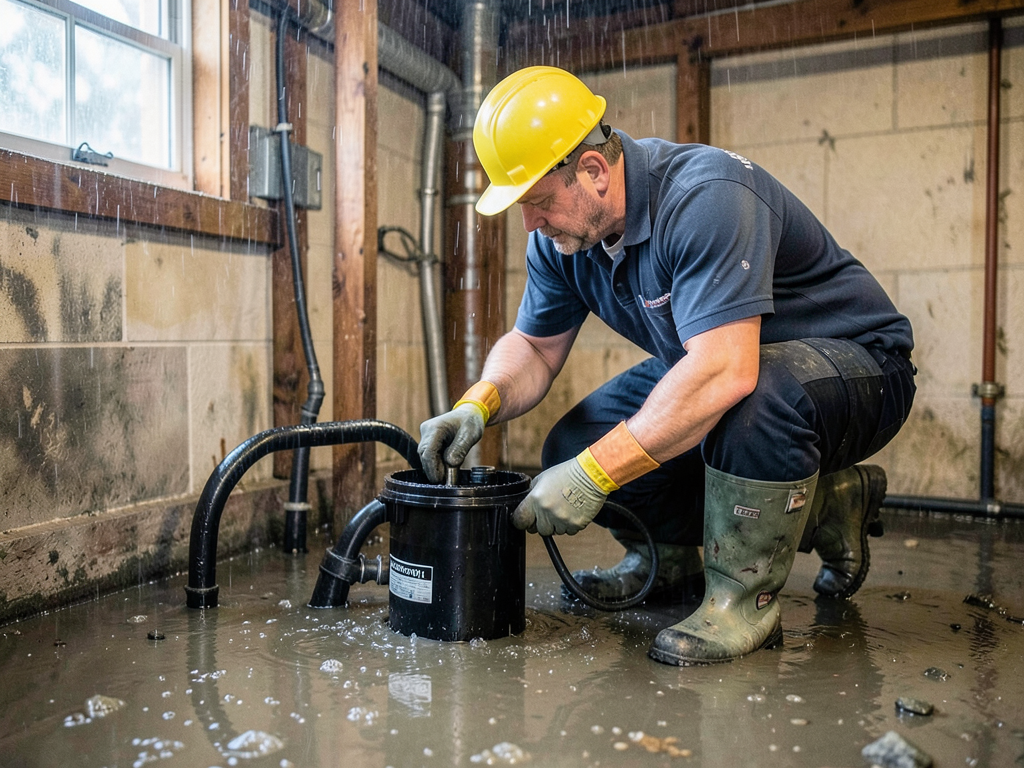
What to Do When Your Portland Sump Pump Fails During a Heavy Rainstorm
When heavy rain pounds Portland CT and your sump pump stops working, water rises fast. The Connecticut River valley’s high water table and clay-rich soil mean basement flooding happens quickly. You need immediate action before damage spreads.
First, stay calm but move fast. A failed sump pump during a storm can flood a basement in under 30 minutes. The key is understanding what’s happening and taking the right steps while help arrives.
Immediate Steps When Your Sump Pump Fails
Water from a failed pump creates several dangers. Electrical hazards from submerged outlets, structural damage to foundation walls, and mold growth within 24-48 hours are all real threats.
Start by checking the obvious causes. Is the power out? Heavy storms often knock out electricity. If so, a battery backup system should activate automatically. If it doesn’t, that’s another problem to address.
Next, inspect the float switch. Sometimes debris jams it in the off position. Gently lift the float arm. If the pump starts, you’ve found the issue. But don’t leave it like that – debris will jam it again. Making the Switch to Tankless Water Heaters in Glastonbury.
Listen for unusual sounds. A humming motor that doesn’t pump water indicates a stuck impeller. A grinding noise suggests worn bearings. These sounds tell technicians exactly what’s wrong before they arrive.
Common Portland Sump Pump Failure Points
Portland’s location near the Connecticut River creates unique challenges. The high water table means pumps run frequently, especially during spring thaws and heavy summer storms.
Float switch failures top the list. These mechanical switches wear out from constant use. In Portland’s clay soil, sediment builds up around the switch, causing it to stick.
Motor burnout happens when pumps run dry or struggle against debris. The Connecticut River valley’s sediment-rich groundwater accelerates this wear.
Discharge line freezing rarely affects Portland directly, but ice dams upstream can back water into your pit. This creates pressure that damages seals and housings.
Power surges during storms fry pump controls. Portland’s aging electrical infrastructure in some neighborhoods makes this more common than you’d expect.
Emergency Response Timeline for Portland Residents
When you call for emergency service, here’s what happens. A dispatcher takes your details and severity assessment. They immediately contact the nearest technician. Who to Call for 24 Hour Emergency Plumbing Help in East Hartford.
Response times in Portland average 45-60 minutes during storms. Technicians carry common replacement parts in their trucks. This means many repairs happen on the first visit. EPA Basement Flooding Guide.
While waiting, continue basic damage control. Move valuables to higher ground. Use towels or a wet vacuum if water is shallow. But never enter standing water if you’re unsure about electrical safety.
Document everything with photos. Insurance companies need evidence of the flooding source and extent. This documentation speeds claims processing.
Portland’s Unique Flooding Challenges
The Connecticut River valley’s geology affects sump pump performance. Portland sits on a mix of glacial till and marine clay deposits. This combination holds water like a sponge.
During heavy rains, water moves laterally through soil toward the river. Your basement becomes a collection point. A working pump is your only defense.
Meshomasic State Forest’s elevation means runoff flows toward Portland neighborhoods. Stormwater systems built decades ago struggle with current rainfall patterns.
The Arrigoni Bridge area experiences unique microclimates. Localized flooding there can overwhelm municipal drainage before river levels rise.
What to Expect During Emergency Repair
When technicians arrive, they assess the situation systematically. First, they check for immediate hazards like live electrical connections in water.
Next, they test the existing pump. Sometimes cleaning debris from the intake screen restores function. Other times, replacement is the only option.
Technicians carry multimeters to test electrical components. They check voltage, ground continuity, and control board function. This diagnostic approach prevents unnecessary replacements.
For pumps beyond repair, they recommend replacement options. Submersible pumps handle Portland’s sediment better than pedestal models. The initial cost difference pays off in reliability. Repair Your West Hartford Sewer Line Without Digging Up the Yard.
Preventing Future Failures
Regular maintenance prevents most emergency calls. Clean the sump pit annually. Remove sediment that accumulates over time. Test the pump by pouring water into the pit.
Check the discharge line for obstructions. Portland’s autumn leaves often block outdoor drains. Clear them before storm season.
Install a battery backup system if you don’t have one. Portland’s power grid reliability makes this essential. Modern systems provide 24-48 hours of protection.
Consider a secondary pump. These activate when the primary fails or can’t keep up with inflow. For Portland’s high water table, this redundancy prevents catastrophic flooding.
Cost Factors for Emergency Repairs
Emergency service calls in Portland typically cost more than scheduled repairs. After-hours dispatch fees apply. Parts availability affects total cost.
Simple repairs like switch replacement might cost $150-250. Complete pump replacement runs $400-800 depending on capacity and features.
Battery backup installation adds $300-500. Secondary pump systems cost $600-1,000 installed. These prevent much more expensive water damage.
Insurance coverage varies. Some policies cover sump pump failure if it’s sudden and accidental. Gradual wear usually isn’t covered. Check your policy details.
Portland Neighborhoods Most at Risk
Areas near the Connecticut River face highest risk. The river’s proximity means water tables stay elevated year-round.
Neighborhoods along Route 66 experience unique challenges. The highway’s drainage system can back up during extreme storms, affecting nearby homes.
Properties in the 06480 ZIP code near Meshomasic State Forest deal with runoff from higher elevations. Their drainage patterns differ from downtown Portland.
Older homes in Portland often have undersized original pumps. Building codes from decades ago didn’t anticipate today’s rainfall intensity.
Professional vs. DIY Repairs
DIY repairs seem tempting during emergencies. But sump pump systems involve water and electricity – a dangerous combination.
Professional technicians carry proper safety equipment. They understand local building codes. They can spot related issues you might miss.
Incorrect repairs can void insurance coverage. They might also create new hazards. Professional work includes liability protection.
Emergency service includes proper disposal of old equipment. This matters because sump pumps contain materials requiring special handling.
Long-term Solutions for Portland Homes
Whole-house waterproofing might be worth considering. This includes exterior drainage improvements, foundation sealing, and upgraded pumping systems.
Smart pump controllers monitor performance and alert you to problems before failures occur. These systems cost $200-400 but prevent expensive emergencies.
Water alarm systems provide early warning. Place them at different heights in your basement. They give you time to respond before major flooding.
Regular professional inspections catch developing issues. Annual checkups cost $100-150 but often prevent $1,000+ emergency repairs.
When to Call for Emergency Service
Call immediately if water is actively rising and your pump isn’t working. Don’t wait to see if it starts again.
Strange noises from the pump indicate mechanical problems. These usually worsen quickly. Early intervention prevents complete failure.
Repeated cycling suggests control problems. The pump turns on and off rapidly, wearing out components. This needs professional diagnosis.
Visible water damage around the pump base indicates seal failure. Water here means the pump can’t maintain prime.
Insurance Considerations
Document everything when flooding occurs. Photos, videos, and written descriptions help with insurance claims.
Keep receipts for emergency services. Some policies reimburse reasonable emergency repair costs.
Ask your insurance agent about sump pump coverage. Many standard policies exclude groundwater flooding without specific endorsements.
Consider adding water backup coverage. This typically costs $50-100 annually but provides valuable protection.
Portland’s Building Code Requirements
Connecticut State Building Code requires proper sump pump installation in areas with high water tables. Portland follows these state standards.
Discharge lines must terminate at least 10 feet from foundations. They can’t direct water toward neighboring properties.
Pumps in finished basements need sealed covers to prevent radon gas entry. This requirement affects pump selection and installation.
Electrical codes require GFCI protection for all sump pump circuits. This safety feature prevents shocks in wet conditions.
Choosing Replacement Equipment
Modern pumps offer features older models lack. Variable speed motors adjust to inflow rates. This prevents short cycling and extends life.
Cast iron housings resist corrosion better than plastic. For Portland’s mineral-rich groundwater, this durability matters.
Check valve quality affects system performance. Cheap check valves fail frequently, causing pumps to run unnecessarily.
Consider pump capacity carefully. A 1/3 HP pump handles most Portland homes. But larger homes or those near the river might need 1/2 HP or greater.
Maintenance Schedule for Portland Homes
Test your pump monthly during wet seasons. Pour water into the pit and verify activation.
Clean the intake screen quarterly. Sediment buildup reduces efficiency and can cause overheating.
Inspect discharge lines twice yearly. Check for obstructions, damage, or improper grading that directs water back toward your foundation.
Replace batteries in backup systems annually. Test the entire backup system quarterly to ensure reliability.
Local Service Providers
Choose local companies familiar with Portland’s specific challenges. They understand local soil conditions, building codes, and typical failure patterns.
Look for companies offering 24/7 emergency service. Sump pump failures rarely happen during business hours.
Verify proper licensing and insurance. Connecticut requires specific plumbing licenses for pump work. Plumbing East Hampton.
Read reviews focusing on emergency response. Quick arrival times matter when water is rising.
Final Thoughts
A failed sump pump during a storm creates immediate danger. But understanding the system and knowing what to do reduces damage and stress.
Regular maintenance prevents most emergencies. When problems do occur, quick professional response minimizes damage.
Portland’s unique geography makes reliable pumping systems essential. Don’t wait for the next storm to address vulnerabilities.
Your home’s protection depends on a system you rarely think about – until it fails. Make sure that system works when you need it most.
Frequently Asked Questions
How long does emergency sump pump repair take?
Most emergency repairs in Portland take 1-3 hours once the technician arrives. Simple fixes like switch replacement might take under an hour. Complete pump replacement typically requires 2-3 hours including testing and cleanup.
Can I use a generator if my sump pump fails during a power outage?
Yes, but only if you know what you’re doing. Plug the pump directly into the generator – never backfeed your home’s electrical system. Make sure the generator is properly grounded and kept dry. Consider professional installation of a transfer switch for safer operation.
What’s the difference between a pedestal and submersible sump pump?
Pedestal pumps sit above the water with only the intake submerged. They’re cheaper and easier to service but noisier and less reliable. Submersible pumps operate underwater, making them quieter and more durable. For Portland’s conditions, submersible pumps typically last longer despite higher initial cost.
How much does it cost to replace a sump pump in Portland?
Standard replacement costs range from $400-800 installed, depending on pump quality and capacity. Premium models with battery backup cost $700-1,200. Emergency replacement during storms may cost 20-30% more due to after-hours fees and immediate parts availability.
Should I get a battery backup system?
Yes, especially in Portland where power outages often accompany heavy storms. A battery backup provides 24-48 hours of protection during outages. The cost of $300-500 is minimal compared to potential water damage from a failed primary pump during a storm. For more information, visit FEMA Flood Protection Resources.
{
“@context”: “https://schema.org”,
“@type”: “BlogPosting”,
“headline”: “What to Do When Your Portland Sump Pump Fails During a Heavy Rainstorm”,
“description”: “Emergency sump pump repair in Portland CT when heavy rain floods your basement. 24/7 local service with rapid response to prevent water damage.”,
“wordCount”: 1878,
“datePublished”: “2026-04-23T12:39:00.000Z”,
“dateModified”: “2026-04-23T12:39:00.000Z”,
“inLanguage”: “en-US”,
“mainEntityOfPage”: {
“@type”: “WebPage”,
“@id”: “https://fivestarplumbinghartford.com”
},
“publisher”: {
“@type”: “LocalBusiness”,
“name”: “Five Star Plumbing Hartford”,
“url”: “https://fivestarplumbinghartford.com”
},
“author”: {
“@type”: “Organization”,
“name”: “Five Star Plumbing Hartford”,
“url”: “https://fivestarplumbinghartford.com”
},
“image”: {
“@type”: “ImageObject”,
“url”: “https://fivestarplumbinghartford.com/wp-content/uploads/2026/03/what-to-do-when-your-portland-sump-pump-fails-duri-1.png”
}
}
{
“@context”: “https://schema.org”,
“@type”: “Plumber”,
“name”: “Five Star Plumbing Hartford”,
“url”: “https://fivestarplumbinghartford.com”,
“address”: {
“@type”: “PostalAddress”,
“addressLocality”: “Hartford”
},
“areaServed”: {
“@type”: “City”,
“name”: “Hartford”
}
}
{
“@context”: “https://schema.org”,
“@type”: “FAQPage”,
“mainEntity”: [
{
“@type”: “Question”,
“name”: “How long does emergency sump pump repair take?”,
“acceptedAnswer”: {
“@type”: “Answer”,
“text”: “Most emergency repairs in Portland take 1-3 hours once the technician arrives. Simple fixes like switch replacement might take under an hour. Complete pump replacement typically requires 2-3 hours including testing and cleanup.”
}
},
{
“@type”: “Question”,
“name”: “Can I use a generator if my sump pump fails during a power outage?”,
“acceptedAnswer”: {
“@type”: “Answer”,
“text”: “Yes, but only if you know what you’re doing. Plug the pump directly into the generator – never backfeed your home’s electrical system. Make sure the generator is properly grounded and kept dry. Consider professional installation of a transfer switch for safer operation.”
}
},
{
“@type”: “Question”,
“name”: “What’s the difference between a pedestal and submersible sump pump?”,
“acceptedAnswer”: {
“@type”: “Answer”,
“text”: “Pedestal pumps sit above the water with only the intake submerged. They’re cheaper and easier to service but noisier and less reliable. Submersible pumps operate underwater, making them quieter and more durable. For Portland’s conditions, submersible pumps typically last longer despite higher initial cost.”
}
},
{
“@type”: “Question”,
“name”: “How much does it cost to replace a sump pump in Portland?”,
“acceptedAnswer”: {
“@type”: “Answer”,
“text”: “Standard replacement costs range from $400-800 installed, depending on pump quality and capacity. Premium models with battery backup cost $700-1,200. Emergency replacement during storms may cost 20-30% more due to after-hours fees and immediate parts availability.”
}
},
{
“@type”: “Question”,
“name”: “Should I get a battery backup system?”,
“acceptedAnswer”: {
“@type”: “Answer”,
“text”: “Yes, especially in Portland where power outages often accompany heavy storms. A battery backup provides 24-48 hours of protection during outages. The cost of $300-500 is minimal compared to potential water damage from a failed primary pump during a storm. For more information, visit FEMA Flood Protection Resources.”
}
}
]
}
{
“@context”: “https://schema.org”,
“@type”: “BreadcrumbList”,
“itemListElement”: [
{
“@type”: “ListItem”,
“position”: 1,
“name”: “Home”,
“item”: “https://fivestarplumbinghartford.com”
},
{
“@type”: “ListItem”,
“position”: 2,
“name”: “Blog”,
“item”: “https://fivestarplumbinghartford.com/blog”
},
{
“@type”: “ListItem”,
“position”: 3,
“name”: “What to Do When Your Portland Sump Pump Fails During a Heavy Rainstorm”
}
]
}
{
“@context”: “https://schema.org”,
“@type”: “Service”,
“serviceType”: “Plumbing”,
“provider”: {
“@type”: “LocalBusiness”,
“name”: “Five Star Plumbing Hartford”,
“url”: “https://fivestarplumbinghartford.com”
},
“areaServed”: {
“@type”: “City”,
“name”: “Hartford”
},
“description”: “Emergency sump pump repair in Portland CT when heavy rain floods your basement. 24/7 local service with rapid response to prevent water damage.”
}