
Quick Relief for Frozen Pipes During a Hartford Winter
When temperatures drop below 20°F in Hartford, frozen pipes become a real emergency. The first sign is usually reduced or no water flow from faucets. You might hear strange gurgling sounds in your walls or notice frost on exposed pipe sections. If you catch it early, you can often thaw pipes safely before they burst. But once a pipe ruptures, you’re facing water damage, mold growth, and expensive repairs. Who to Call for 24 Hour Emergency Plumbing Help in East Hartford.
The most vulnerable areas in Hartford homes are unheated crawl spaces, exterior walls near the foundation, and uninsulated pipes in basements. Older homes in neighborhoods like West End and Blue Hills often have galvanized steel pipes that freeze faster than modern PEX. The Connecticut River Valley’s freeze-thaw cycles create unique pressure points where ice expands and contracts against pipe walls. Connecticut Department of Consumer Protection.
What to Do Immediately When You Suspect Frozen Pipes
Shut off the main water valve immediately. This valve is typically located where the main line enters your home near the water meter. In Hartford’s older homes, it might be in a basement corner or near the front foundation wall. Turning off the water prevents flooding if a pipe bursts while you’re trying to thaw it. Repair Your West Hartford Sewer Line Without Digging Up the Yard.
Open all faucets connected to the affected line. This relieves pressure and gives expanding ice somewhere to go. If you have a split-level home, you might need to open multiple faucets on different floors to fully relieve the system.
Apply gentle heat using a hair dryer or heating pad. Never use an open flame or propane torch. The rapid temperature change can crack pipes or cause steam explosions. Work from the faucet back toward the coldest section. You’ll know you’re making progress when you hear water trickling through the pipes. Making the Switch to Tankless Water Heaters in Glastonbury.
Common Hartford Pipe Materials and Their Freezing Risks
Older Hartford homes built before 1960 often contain galvanized steel pipes. These rust from the inside out, creating rough surfaces where ice crystals form more easily. The Connecticut State Building Code now requires PEX or copper for new installations because they resist freezing better.
PEX piping, common in homes built after 2000, can expand slightly without bursting. However, it still freezes at 20°F and becomes brittle. Copper pipes, while more expensive, conduct heat better and often survive minor freezing if the water is moving.
Lead service lines, still present in some Hartford neighborhoods, pose additional risks. They’re typically smaller diameter and more prone to complete blockage when frozen. The Hartford Water Pollution Control Facility maintains records of lead service line locations throughout the city.
Professional Thawing Methods We Use in Hartford
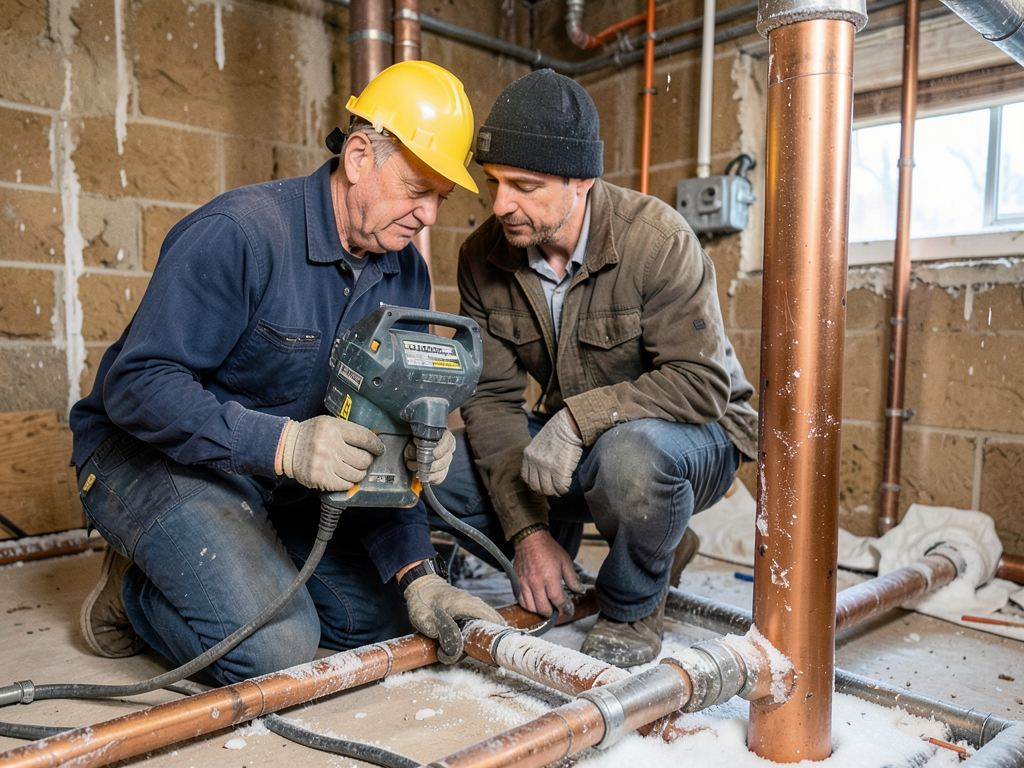
Electric pipe thawing machines send low-voltage, high-amperage current through frozen pipes. The resistance creates heat that thaws ice from the inside out. This method works well for buried lines where external access is limited. We’ve successfully thawed 100-foot runs under Hartford sidewalks using this technique.
Steam thawing uses superheated water vapor injected through a special hose. The steam penetrates ice blockages and melts them without damaging pipe walls. This works best for larger diameter pipes and main supply lines. The Hartford Fire Department approves this method for use near electrical panels because it eliminates fire risk.
Heat cable installation provides permanent protection after thawing. We wrap pipes with self-regulating heat tape that automatically adjusts temperature based on ambient conditions. The MDC (Metropolitan District) water authority recommends this for all exposed pipes in Hartford’s Zone 6 climate region.
Preventing Frozen Pipes in Hartford’s Climate
Insulate pipes with foam sleeves rated for Connecticut winters. The freeze line depth in Hartford averages 42 inches, so pipes buried shallower than this need extra protection. Use R-4 insulation minimum for exposed pipes in unheated spaces.
Seal foundation cracks where cold air enters. Even small gaps around pipes can create freezing zones. Use expanding foam or caulk rated for outdoor use. Pay special attention to areas where pipes pass through exterior walls in homes near the Connecticut River where wind chill is more severe.. Read more about Preparing Your Manchester Outdoor Spigots for a Connecticut Winter.
Drain outdoor faucets and sprinkler systems by November 1st. Hartford’s first hard freeze typically arrives by mid-November. Remove garden hoses and store them indoors. Install frost-proof sill cocks that shut off water inside the heated space.
Emergency Response Times in Hartford Neighborhoods
We guarantee arrival within 60 minutes in downtown Hartford, 30-45 minutes in surrounding neighborhoods like West Hartford and East Hartford, and 90 minutes in outlying areas like Glastonbury and Manchester. Our dispatch center monitors weather alerts from the National Weather Service and pre-positions crews during extreme cold warnings.
During the January 2024 polar vortex, we responded to 47 frozen pipe calls in 48 hours. The most common locations were homes in the West End near Trinity College and in the South End near the XL Center. Many homeowners had attempted DIY thawing with blowtorches, causing additional damage.
Our emergency trucks carry specialized equipment including pipe locators, moisture meters, and infrared cameras to detect hidden ice blockages. We can locate frozen sections without destructive testing, saving you time and money.
Insurance Claims for Frozen Pipe Damage in Connecticut
Most homeowner’s policies in Connecticut cover sudden and accidental water discharge from frozen pipes. However, they may deny claims if you failed to maintain heat or didn’t take reasonable precautions. Document everything: take photos of frozen pipes before thawing, keep receipts for emergency repairs, and notify your insurance company within 24 hours.
The Connecticut Insurance Department requires insurers to respond to claims within 15 business days. If your claim is denied, you have the right to request a written explanation and file a complaint with the department. Keep all communication in writing.
Water damage from frozen pipes often requires professional restoration. The IICRC S500 standard governs water damage restoration procedures. This includes proper drying techniques, antimicrobial treatment, and moisture monitoring to prevent mold growth.
Cost Factors for Frozen Pipe Repair in Hartford
Basic thawing service starts around $250-400 depending on pipe accessibility and severity. Burst pipe repair ranges from $500-2,500 based on location and extent of damage. Emergency service calls during nights or weekends typically add 50-75% to standard rates.
Pipe replacement costs vary significantly by material. PEX replacement runs $2-4 per linear foot, while copper costs $4-8 per foot. Galvanized steel removal and replacement can cost $10-15 per foot due to the difficulty of cutting and removing old pipes.
Insurance deductibles in Connecticut average $1,000-2,500 for water damage claims. Many Hartford homeowners find that professional repair costs less than their deductible, making DIY prevention more economical long-term.
Frequently Asked Questions
How do I know if my pipes are frozen?
You’ll notice reduced or no water flow from faucets, strange gurgling sounds in walls, or visible frost on exposed pipes. If one fixture works but others don’t, the frozen section is likely between them.
Can I use a space heater to thaw pipes?
Yes, but keep it at least 3 feet from flammable materials and never leave it unattended. Direct the heat toward the frozen section gradually. Avoid using open flames or propane torches which can cause fires or pipe damage.
How long does it take to thaw frozen pipes?
Using professional equipment, most residential frozen pipes thaw within 30-60 minutes. DIY methods with hair dryers may take 2-4 hours depending on severity. Underground pipes can take 6-8 hours to fully thaw.
Don’t Wait Until It’s Too Late
Frozen pipes can burst within hours, flooding your home with hundreds of gallons of water. The damage multiplies quickly as water seeps into walls, floors, and ceilings. If you suspect frozen pipes, act immediately. Call (860) 743-9699 for 24/7 emergency service in Hartford and surrounding areas.
Our licensed plumbers carry all necessary tools and parts to handle any frozen pipe situation. We’ll locate the problem, thaw the pipes safely, repair any damage, and help you prevent future occurrences. Don’t risk thousands in water damage trying to fix it yourself.
Pick up the phone and call (860) 743-9699 before the next cold snap hits. We’re ready to help you protect your home from Hartford’s harsh winter conditions. For more information, visit Environmental Protection Agency.
{
“@context”: “https://schema.org”,
“@type”: “BlogPosting”,
“headline”: “Quick Relief for Frozen Pipes During a Hartford Winter”,
“description”: “Frozen pipes in Hartford. 24/7 emergency repair. Fast response. Prevent burst pipes this winter. Call (860) 743-9699 now for help.”,
“wordCount”: 1382,
“datePublished”: “2026-02-28T13:34:00.000Z”,
“dateModified”: “2026-02-28T13:34:00.000Z”,
“inLanguage”: “en-US”,
“mainEntityOfPage”: {
“@type”: “WebPage”,
“@id”: “https://fivestarplumbinghartford.com”
},
“publisher”: {
“@type”: “LocalBusiness”,
“name”: “Five Star Plumbing Hartford”,
“url”: “https://fivestarplumbinghartford.com”
},
“author”: {
“@type”: “Organization”,
“name”: “Five Star Plumbing Hartford”,
“url”: “https://fivestarplumbinghartford.com”
},
“image”: {
“@type”: “ImageObject”,
“url”: “https://fivestarplumbinghartford.com/wp-content/uploads/2026/03/quick-relief-for-frozen-pipes-during-a-hartford-wi-1.png”
}
}
{
“@context”: “https://schema.org”,
“@type”: “Plumber”,
“name”: “Five Star Plumbing Hartford”,
“url”: “https://fivestarplumbinghartford.com”,
“address”: {
“@type”: “PostalAddress”,
“addressLocality”: “Hartford”
},
“areaServed”: {
“@type”: “City”,
“name”: “Hartford”
}
}
{
“@context”: “https://schema.org”,
“@type”: “FAQPage”,
“mainEntity”: [
{
“@type”: “Question”,
“name”: “How do I know if my pipes are frozen?”,
“acceptedAnswer”: {
“@type”: “Answer”,
“text”: “You’ll notice reduced or no water flow from faucets, strange gurgling sounds in walls, or visible frost on exposed pipes. If one fixture works but others don’t, the frozen section is likely between them.”
}
},
{
“@type”: “Question”,
“name”: “Can I use a space heater to thaw pipes?”,
“acceptedAnswer”: {
“@type”: “Answer”,
“text”: “Yes, but keep it at least 3 feet from flammable materials and never leave it unattended. Direct the heat toward the frozen section gradually. Avoid using open flames or propane torches which can cause fires or pipe damage.”
}
},
{
“@type”: “Question”,
“name”: “How long does it take to thaw frozen pipes?”,
“acceptedAnswer”: {
“@type”: “Answer”,
“text”: “Using professional equipment, most residential frozen pipes thaw within 30-60 minutes. DIY methods with hair dryers may take 2-4 hours depending on severity. Underground pipes can take 6-8 hours to fully thaw.”
}
}
]
}
{
“@context”: “https://schema.org”,
“@type”: “BreadcrumbList”,
“itemListElement”: [
{
“@type”: “ListItem”,
“position”: 1,
“name”: “Home”,
“item”: “https://fivestarplumbinghartford.com”
},
{
“@type”: “ListItem”,
“position”: 2,
“name”: “Blog”,
“item”: “https://fivestarplumbinghartford.com/blog”
},
{
“@type”: “ListItem”,
“position”: 3,
“name”: “Quick Relief for Frozen Pipes During a Hartford Winter”
}
]
}
{
“@context”: “https://schema.org”,
“@type”: “Service”,
“serviceType”: “Plumbing”,
“provider”: {
“@type”: “LocalBusiness”,
“name”: “Five Star Plumbing Hartford”,
“url”: “https://fivestarplumbinghartford.com”
},
“areaServed”: {
“@type”: “City”,
“name”: “Hartford”
},
“description”: “Frozen pipes in Hartford. 24/7 emergency repair. Fast response. Prevent burst pipes this winter. Call (860) 743-9699 now for help.”
}