
Professional Gas Range and Cooktop Hookups for Your Newington Kitchen Remodel
Installing a new gas range or cooktop in your Newington kitchen requires more than just plugging it in. Professional gas hookups ensure your new appliance operates safely and meets all Connecticut building codes. From proper gas line sizing to leak testing and permit handling, licensed plumbers handle every detail to protect your home and family. Connecticut Department of Consumer Protection licensing.
Newington homes built from the 1960s through the 1990s often have aging galvanized steel gas lines that corrode from the inside out. This creates hidden restrictions that can starve high-BTU ranges of the fuel they need. A professional assessment catches these issues before they cause dangerous backdrafting or incomplete combustion in your new appliance. Plumbing Newington.
Call (860) 743-9699 today to schedule your inspection.
Why Professional Gas Hookups Matter in Newington
Gas appliances need precise fuel delivery measured in British Thermal Units. A 36-inch professional range can demand 60,000 to 90,000 BTU per hour. Undersized lines cause yellow flames, soot buildup, and carbon monoxide production. Oversized lines waste energy and may not maintain proper pressure during peak demand.
Connecticut fuel gas code Section 403.10 requires gas lines to be sized using the longest length method with a 0.5-inch WC pressure drop maximum. This calculation considers pipe length, diameter, and the total connected load. Many Newington homes near the Berlin Turnpike were built with 1/2-inch lines that barely meet minimum requirements for modern appliances.
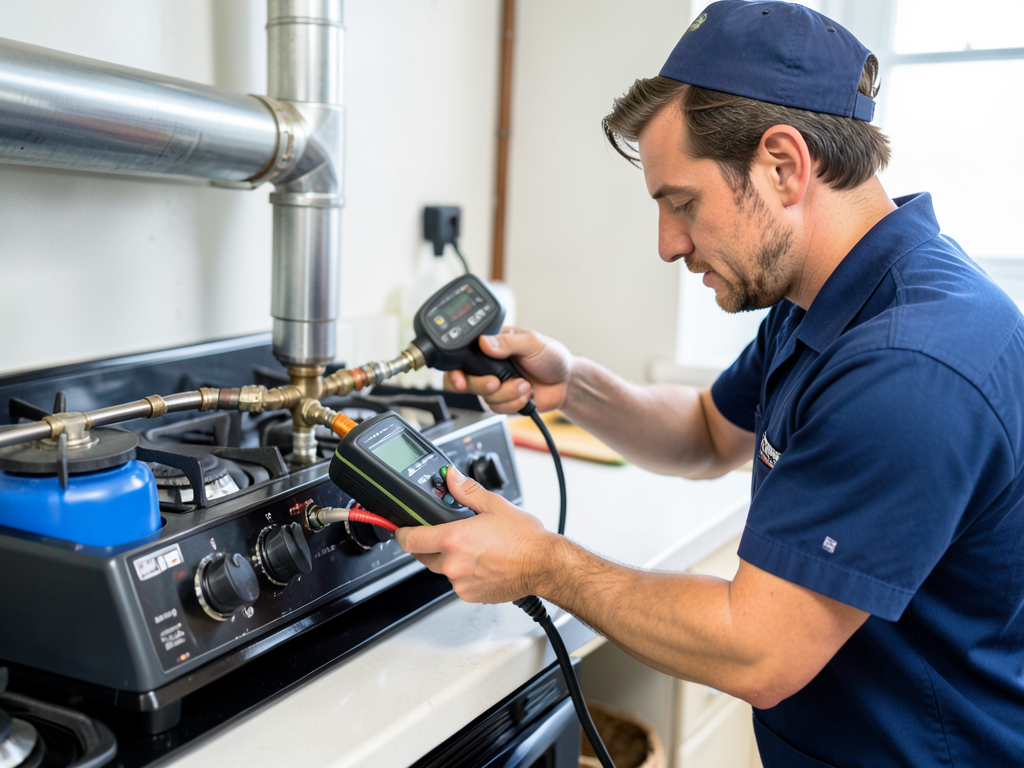
Diagram showing proper gas line sizing calculations for a 60,000 BTU range with 30-foot pipe run.
Common Gas Line Issues in Hartford County Homes
Black iron pipe remains the standard for natural gas distribution, but flexible stainless steel connectors are approved for appliance connections. The transition between rigid and flexible piping must use proper fittings rated for gas service. Mixing incompatible materials creates leak paths that soap testing may miss.
Many Newington ranches built in the 1970s have hidden gas shutoff valves behind drywall. During kitchen remodels, these valves often get buried or removed without replacement. Code requires a readily accessible shutoff within 6 feet of the appliance. Missing valves mean you cannot isolate the gas supply during emergencies.
Soil conditions in the Newington area, with its Connecticut River Valley silt composition, accelerate corrosion on underground gas lines. Homes near Mill Pond Park experience higher moisture levels that speed up pipe degradation. Annual visual inspections catch early warning signs like rust spots or green copper oxide buildup. Signs You Need Sewer Repair.
Our Newington Service Area
We serve all of Newington including the Cedar Street corridor, West Lane industrial area, and neighborhoods near Mill Pond Park. Our Hartford-based team maintains a fully stocked service vehicle with common gas fittings, flexible connectors, and leak detection equipment for rapid response throughout Hartford County.
Zip codes we cover in Newington include 06111 and portions of 06118 near the West Hartford border. We coordinate directly with the Newington Building Department for permit processing and inspections. Most gas appliance installations require a mechanical permit and final inspection before use. Safe and Certified Gas Line Installation for Windsor Property Owners.
Call (860) 743-9699 for fast service in Newington and surrounding Hartford County communities.
The Installation Process: What to Expect
Professional gas hookups follow a specific sequence to ensure safety and code compliance. The process starts with evaluating your existing gas infrastructure and ends with pressure testing and final inspection. Each step protects your investment and ensures reliable operation.
- Site Assessment
Technician evaluates existing gas lines, shutoff valves, and electrical requirements. Measures available space and checks for proper clearances from combustible materials.
- Permit Acquisition
Building department submits mechanical permit application. Provides drawings showing gas line routing and appliance location for review.
- Gas Line Modification
Installs new piping or modifies existing lines to meet BTU requirements. Uses black iron for main runs and approved flexible connectors for appliance hookup.
- Appliance Connection
Levels range, installs anti-tip brackets, connects gas line with proper fittings. Tests all connections with electronic leak detector.
- Pressure Testing
Pressurizes system to 10 PSI and monitors for one hour minimum. No pressure drop allowed before proceeding.
- Final Inspection
Building inspector verifies proper installation, accessible shutoff valve, and correct appliance clearances.
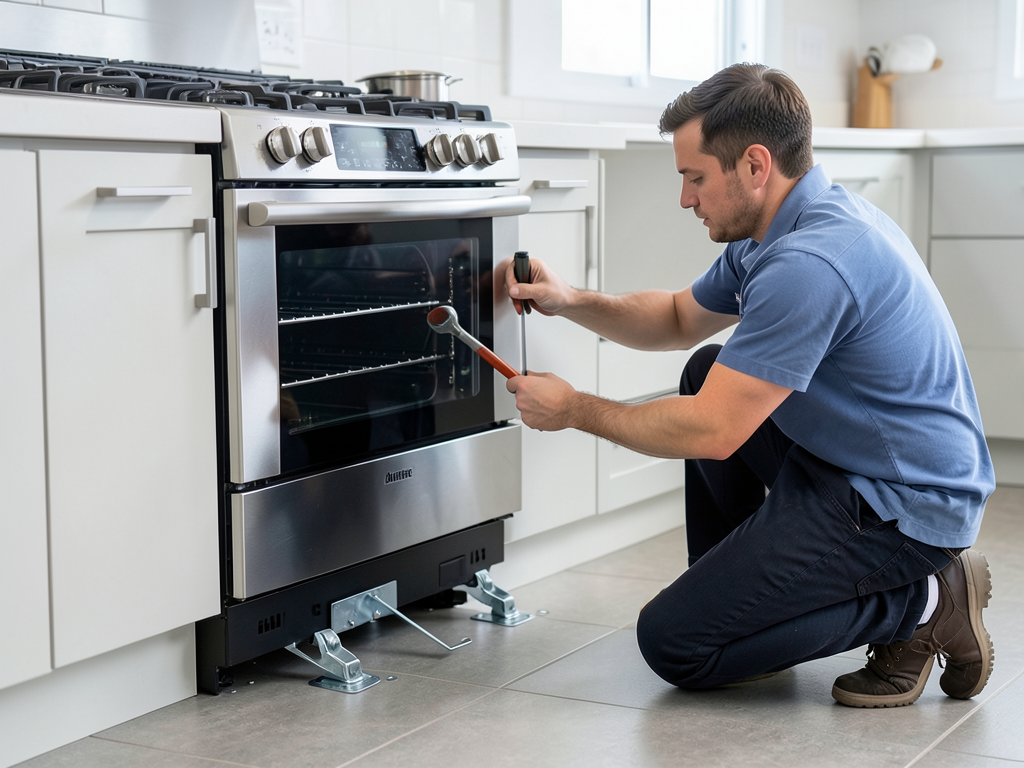
Photo showing proper flexible gas connector installation with anti-tip bracket on a 30-inch range.
Local Permits and Codes
Newington Building Department requires mechanical permits for all gas appliance installations. The permit process includes plan review, on-site inspections, and final approval before use. Work without permits risks fines and insurance claim denials if problems occur.
Connecticut State Building Code Chapter 24 adopts NFPA 54 National Fuel Gas Code with local amendments. Key requirements include: NFPA 54 National Fuel Gas Code.
- Accessible shutoff valve within 6 feet of appliance
- Proper pipe sizing using longest length method
- Pressure testing at 1.5 times working pressure
- Approved flexible connectors for appliance hookups
- Clearance from combustible materials per manufacturer specs
Gas line pressure testing uses a manometer to verify system integrity. The test pressurizes lines to 10 PSI and holds pressure for one hour minimum. Any drop indicates leaks that require repair before inspection. This test catches issues that soap bubble testing might miss.
Carbon monoxide detectors are now required in all Connecticut homes with fuel-burning appliances. Install detectors on every level and outside sleeping areas. Test monthly and replace every 5-7 years per manufacturer recommendations.
Pricing and Free Estimates
Gas appliance installation costs vary based on existing infrastructure and required modifications. Simple hookups where gas lines already exist typically cost $250-$400. New gas line installations or conversions from electric range to gas range range from $800-$2,500 depending on distance and complexity.
Factors affecting cost include:
- Distance from existing gas line to appliance
- Need for new gas shutoff valve installation
- Permit fees and inspection costs
- Appliance leveling and anti-tip bracket installation
- Old appliance removal and disposal
We provide free written estimates that detail all work required for your specific installation. No hidden fees or surprise charges. Our quotes include permit acquisition, installation labor, and final inspection coordination.
Safety Checklist for Homeowners
Gas appliances require regular safety checks to prevent dangerous situations. Create a simple inspection routine to protect your family and investment. Most safety issues develop gradually, making regular checks essential. Making the Switch to Tankless Water Heaters in Glastonbury.
| Safety Item | Check Frequency | What to Look For |
|---|---|---|
| Gas shutoff valve | Monthly | Easy access, no corrosion, smooth operation |
| Flexible connector | Every 6 months | No cracks, kinks, or corrosion |
| Appliance flames | Each use | Steady blue flames, no yellow tipping |
| Carbon monoxide detectors | Monthly | Proper operation, no end-of-life signals |
| Vent hood | Every 6 months | Clean filters, proper airflow |
Emergency gas shutoff location should be known by all household members. The main gas meter valve requires a wrench to operate and should only be used in emergencies. Individual appliance shutoffs allow you to isolate problems without affecting the entire home.
Strange odors near gas appliances indicate potential leaks. Natural gas has mercaptan added for odor detection. If you smell gas, evacuate immediately and call the gas company from a safe location. Do not operate electrical switches or create sparks.
Flexible vs. Rigid Gas Piping
Choosing between flexible and rigid gas piping affects installation cost and long-term reliability. Each type has specific applications where it performs best. Understanding the differences helps you make informed decisions about your gas system.
| Characteristic | Flexible Stainless Steel | Black Iron Pipe |
|---|---|---|
| Typical Use | Appliance connections | Main distribution lines |
| Installation Time | 30-60 minutes | 2-4 hours |
| Cost Per Foot | $3-$8 | $2-$5 |
| Maximum Length | 6 feet | Unlimited |
| Earthquake Resistance | Excellent | Poor |
Flexible connectors allow slight movement without breaking connections. This flexibility prevents stress cracks that rigid piping develops over time. However, flexible lines cannot be run through walls or buried underground. They require accessible locations for inspection and replacement.
Black iron pipe provides superior flow capacity for main distribution lines. The threaded connections create gas-tight seals when properly sealed with approved thread compound. Rigid piping supports higher pressures and longer runs than flexible connectors allow.
Gas Leak Detection and Emergency Response
Professional leak detection uses electronic sensors that detect gas concentrations as low as 10 parts per million. These instruments are far more sensitive than soap bubble testing and can locate hidden leaks in walls or underground. Electronic detection prevents dangerous situations before they become emergencies.
Common leak locations include:
- Valve stem packing nuts
- Threaded connection joints
- Flexible connector ends
- Appliance manifold connections
- Corrosion spots on older piping
Gas leaks often produce hissing sounds from high-pressure escapes. You may also notice dead vegetation near underground leaks or bubbles in standing water. Electronic sniffers detect these leaks even when no odor is present. Getting Rid of Hard Water with a Professional Softener System in Hartford County.
Emergency response steps:
- Evacuate all people and pets
- Leave doors open for ventilation
- Call 911 from a safe location
- Contact gas company emergency line
- Do not re-enter until cleared by authorities
Carbon monoxide poisoning symptoms include headache, dizziness, nausea, and confusion. These symptoms often affect multiple people simultaneously in the same area. CO detectors with digital readouts show concentration levels and help identify problems early.
Converting Electric to Gas Appliances
Many Newington homeowners switch from electric to gas ranges for better cooking performance and lower operating costs. Gas provides instant heat control and works during power outages. However, conversion requires proper gas infrastructure and electrical modifications.
Electric ranges typically need 40-50 amp 240-volt circuits. Gas ranges often only need standard 120-volt outlets for electronics and ignition. This difference allows you to free up electrical capacity for other uses during kitchen remodels.
BTU requirements for common gas appliances:
- Standard 30-inch range: 40,000 BTU
- Professional 36-inch range: 60,000-90,000 BTU
- Gas cooktop: 30,000-60,000 BTU
- Gas oven: 20,000-30,000 BTU
Existing gas lines may need upgrades to handle the additional load. A professional load calculation ensures your system can support new appliances without pressure drops or safety issues. Undersized lines cause poor performance and potential hazards.
Appliance Leveling and Anti-Tip Brackets
Proper appliance leveling prevents door misalignment and ensures even cooking. Gas ranges have adjustable feet that require careful adjustment for perfect leveling. Even slight tilts cause doors to bind and affect cooking performance.
Anti-tip brackets prevent range tip-over accidents that can cause severe injuries. These brackets anchor the range to the floor or wall, preventing forward tipping when heavy items are placed on open doors. Building codes now require anti-tip devices on all installed ranges.
Installation steps for anti-tip brackets:
- Locate floor joists or wall studs for secure mounting
- Drill pilot holes to prevent splitting
- Attach bracket with lag bolts or masonry anchors
- Slide range back until bracket clicks into place
- Verify range cannot tip forward with force
Leveling requires a precision bubble level and patience. Adjust feet in small increments, checking level in both directions. The range should be level front-to-back and side-to-side. Proper leveling prevents door gaps and ensures even heat distribution.
Post-Installation Services
Professional installation includes more than just connecting the gas line. We provide comprehensive services to ensure your new appliance operates safely and efficiently for years to come.
Carbon monoxide testing verifies proper combustion and venting. We use digital CO detectors to measure levels around the appliance and in living spaces. Readings above 9 ppm indicate potential problems requiring adjustment or repair.
Combustion analysis checks flame quality and efficiency. We measure oxygen levels, carbon monoxide production, and stack temperature to ensure optimal performance. Adjustments to air shutters or gas pressure may be needed for perfect combustion.
Old appliance removal and recycling keeps your kitchen clean and environmentally responsible. We disconnect appliances safely, remove them from your home, and transport them to certified recycling facilities. This service saves you the hassle of disposal and ensures proper handling of refrigerants or other hazardous materials.
Why Choose Five Star Plumbing Hartford
Our Hartford-based team brings 15+ years of local experience to every gas installation. We understand Newington’s unique housing stock and common infrastructure challenges. Our licensed plumbers carry comprehensive insurance and maintain current Connecticut gas fitter certifications.
We provide detailed written estimates with no hidden fees. Our pricing includes permit acquisition, installation labor, and final inspection coordination. We stand behind our work with a satisfaction guarantee and warranty on all installations.
Emergency service is available for gas leak situations. Our technicians carry advanced leak detection equipment and can respond rapidly to dangerous situations. Safety is our top priority in every job we perform.
Call (860) 743-9699 today to schedule your professional gas range or cooktop installation in Newington.
Frequently Asked Questions
How long does gas appliance installation take?
Most installations require 2-4 hours for simple hookups. Complex installations with new gas line runs may take 6-8 hours. We provide accurate time estimates during the initial consultation based on your specific situation.
Do I need permits for gas appliance installation?
Yes, Newington Building Department requires mechanical permits for all gas appliance installations. The permit process includes plan review and final inspection. We handle all permit acquisition and coordinate inspections as part of our service.
What if my existing gas line is too small?
We can upgrade your gas line to handle higher BTU requirements. This may involve replacing undersized piping or adding new runs from the meter. We perform load calculations to determine exactly what modifications are needed for safe operation.
How do I know if I have a gas leak?
Signs include sulfur or rotten egg odors, hissing sounds near pipes, dead vegetation near buried lines, or bubbles in standing water. Electronic leak detectors can find leaks before they become dangerous. If you suspect a leak, evacuate and call emergency services immediately.
Can I convert my electric range to gas?
Yes, but it requires proper gas infrastructure and may need electrical modifications. We assess your existing systems and provide a complete conversion plan including any needed upgrades to gas lines or electrical service.
What maintenance do gas appliances need?
Annual inspections of gas connections, burner ports, and venting systems help prevent problems. Clean burner ports regularly and check for proper flame color. Blue flames indicate proper combustion while yellow flames suggest problems requiring adjustment.
{
“@context”: “https://schema.org”,
“@type”: “BlogPosting”,
“headline”: “Professional Gas Range and Cooktop Hookups for Your Newington Kitchen Remodel”,
“description”: “Safe, code-compliant gas range and cooktop installation in Newington by licensed Hartford plumbers. Get expert hookups, leak testing, and permit handling.”,
“wordCount”: 2345,
“datePublished”: “2026-04-19T11:43:00.000Z”,
“dateModified”: “2026-04-19T11:43:00.000Z”,
“inLanguage”: “en-US”,
“mainEntityOfPage”: {
“@type”: “WebPage”,
“@id”: “https://fivestarplumbinghartford.com”
},
“publisher”: {
“@type”: “LocalBusiness”,
“name”: “Five Star Plumbing Hartford”,
“url”: “https://fivestarplumbinghartford.com”
},
“author”: {
“@type”: “Organization”,
“name”: “Five Star Plumbing Hartford”,
“url”: “https://fivestarplumbinghartford.com”
},
“image”: {
“@type”: “ImageObject”,
“url”: “https://fivestarplumbinghartford.com/wp-content/uploads/2026/03/professional-gas-range-and-cooktop-hookups-for-you-1.png”
}
}
{
“@context”: “https://schema.org”,
“@type”: “Plumber”,
“name”: “Five Star Plumbing Hartford”,
“url”: “https://fivestarplumbinghartford.com”,
“address”: {
“@type”: “PostalAddress”,
“addressLocality”: “Hartford”
},
“areaServed”: {
“@type”: “City”,
“name”: “Hartford”
}
}
{
“@context”: “https://schema.org”,
“@type”: “FAQPage”,
“mainEntity”: [
{
“@type”: “Question”,
“name”: “How long does gas appliance installation take?”,
“acceptedAnswer”: {
“@type”: “Answer”,
“text”: “Most installations require 2-4 hours for simple hookups. Complex installations with new gas line runs may take 6-8 hours. We provide accurate time estimates during the initial consultation based on your specific situation.”
}
},
{
“@type”: “Question”,
“name”: “Do I need permits for gas appliance installation?”,
“acceptedAnswer”: {
“@type”: “Answer”,
“text”: “Yes, Newington Building Department requires mechanical permits for all gas appliance installations. The permit process includes plan review and final inspection. We handle all permit acquisition and coordinate inspections as part of our service.”
}
},
{
“@type”: “Question”,
“name”: “What if my existing gas line is too small?”,
“acceptedAnswer”: {
“@type”: “Answer”,
“text”: “We can upgrade your gas line to handle higher BTU requirements. This may involve replacing undersized piping or adding new runs from the meter. We perform load calculations to determine exactly what modifications are needed for safe operation.”
}
},
{
“@type”: “Question”,
“name”: “How do I know if I have a gas leak?”,
“acceptedAnswer”: {
“@type”: “Answer”,
“text”: “Signs include sulfur or rotten egg odors, hissing sounds near pipes, dead vegetation near buried lines, or bubbles in standing water. Electronic leak detectors can find leaks before they become dangerous. If you suspect a leak, evacuate and call emergency services immediately.”
}
},
{
“@type”: “Question”,
“name”: “Can I convert my electric range to gas?”,
“acceptedAnswer”: {
“@type”: “Answer”,
“text”: “Yes, but it requires proper gas infrastructure and may need electrical modifications. We assess your existing systems and provide a complete conversion plan including any needed upgrades to gas lines or electrical service.”
}
},
{
“@type”: “Question”,
“name”: “What maintenance do gas appliances need?”,
“acceptedAnswer”: {
“@type”: “Answer”,
“text”: “Annual inspections of gas connections, burner ports, and venting systems help prevent problems. Clean burner ports regularly and check for proper flame color. Blue flames indicate proper combustion while yellow flames suggest problems requiring adjustment.”
}
}
]
}
{
“@context”: “https://schema.org”,
“@type”: “HowTo”,
“name”: “Professional Gas Appliance Installation Process”,
“step”: [
{
“@type”: “HowToStep”,
“position”: 1,
“name”: “Site Assessment”,
“text”: “Technician evaluates existing gas lines, shutoff valves, and electrical requirements. Measures available space and checks for proper clearances from combustible materials.”
},
{
“@type”: “HowToStep”,
“position”: 2,
“name”: “Permit Acquisition”,
“text”: “Building department submits mechanical permit application. Provides drawings showing gas line routing and appliance location for review.”
},
{
“@type”: “HowToStep”,
“position”: 3,
“name”: “Gas Line Modification”,
“text”: “Installs new piping or modifies existing lines to meet BTU requirements. Uses black iron for main runs and approved flexible connectors for appliance hookup.”
},
{
“@type”: “HowToStep”,
“position”: 4,
“name”: “Appliance Connection”,
“text”: “Levels range, installs anti-tip brackets, connects gas line with proper fittings. Tests all connections with electronic leak detector.”
},
{
“@type”: “HowToStep”,
“position”: 5,
“name”: “Pressure Testing”,
“text”: “Pressurizes system to 10 PSI and monitors for one hour minimum. No pressure drop allowed before proceeding.”
},
{
“@type”: “HowToStep”,
“position”: 6,
“name”: “Final Inspection”,
“text”: “Building inspector verifies proper installation, accessible shutoff valve, and correct appliance clearances.”
}
],
“image”: “https://fivestarplumbinghartford.com/wp-content/uploads/2026/03/professional-gas-range-and-cooktop-hookups-for-you-1.png”
}
{
“@context”: “https://schema.org”,
“@type”: “BreadcrumbList”,
“itemListElement”: [
{
“@type”: “ListItem”,
“position”: 1,
“name”: “Home”,
“item”: “https://fivestarplumbinghartford.com”
},
{
“@type”: “ListItem”,
“position”: 2,
“name”: “Blog”,
“item”: “https://fivestarplumbinghartford.com/blog”
},
{
“@type”: “ListItem”,
“position”: 3,
“name”: “Professional Gas Range and Cooktop Hookups for Your Newington Kitchen Remodel”
}
]
}
{
“@context”: “https://schema.org”,
“@type”: “Service”,
“serviceType”: “Plumbing”,
“provider”: {
“@type”: “LocalBusiness”,
“name”: “Five Star Plumbing Hartford”,
“url”: “https://fivestarplumbinghartford.com”
},
“areaServed”: {
“@type”: “City”,
“name”: “Hartford”
},
“description”: “Safe, code-compliant gas range and cooktop installation in Newington by licensed Hartford plumbers. Get expert hookups, leak testing, and permit handling.”
}