
How to Select a Sump Pump Discharge Route That Does Not Flood Your Neighbors in Farmington
Your sump pump works hard to keep your Farmington basement dry during Connecticut’s heavy spring rains and rapid winter thaws. But when that water exits your discharge pipe and flows into your neighbor’s yard or creates ice patches on sidewalks, you’ve got a serious problem. Improper sump pump discharge can lead to flooded gardens, icy walkways, frozen pipes, and even legal disputes with neighbors who find their property underwater.. Read more about How to Prevent Basement Flooding During the New England Spring Thaw.
The solution starts with understanding Farmington’s specific drainage patterns, local building codes, and Connecticut’s freeze-thaw cycles. This guide walks you through selecting a discharge route that protects your home while respecting your neighbors’ property and staying compliant with Hartford County regulations. Repair Your West Hartford Sewer Line Without Digging Up the Yard.
Why Farmington’s Soil and Climate Create Unique Drainage Challenges
Farmington sits in the Connecticut River Valley where the soil composition includes a mix of clay, silt, and rocky glacial deposits. This combination creates poor natural drainage that causes water to pool rather than absorb. When your sump pump pushes thousands of gallons of water into already saturated ground, that water has nowhere to go except sideways into neighboring properties.
Connecticut’s climate adds another layer of complexity. The state experiences approximately 46 inches of annual rainfall, with most falling during spring thaws and summer thunderstorms. The frost line in Hartford County extends 42 to 48 inches below grade, meaning any discharge pipe buried shallower than this depth risks freezing and backing up into your basement during winter months.
Local building codes require that sump pump discharge must flow away from foundations and not create nuisance conditions on adjacent properties. The Farmington Building Department enforces these rules strictly, especially in older neighborhoods where homes sit closer together. EPA Soak Up the Rain.
Top 5 Sump Pump Discharge Solutions That Protect Both Properties
Selecting the right discharge solution depends on your property’s slope, soil type, and proximity to neighbors. Here are five proven approaches that balance effectiveness with neighborhood harmony.
1. Underground French Drain Systems with Dry Wells
French drains provide the most professional solution for Farmington homes. These systems consist of perforated pipes surrounded by gravel that collect and disperse water underground. When connected to a dry well, they can handle thousands of gallons without creating surface runoff.
The key to success lies in proper sizing and placement. A typical Farmington home needs a dry well with a minimum capacity of 50 gallons per minute during peak flow. The system should extend at least 10 feet from your foundation and terminate in a location where water can naturally percolate into the soil.
Installation requires excavating a trench 18 to 24 inches deep, lining it with filter fabric, and filling it with clean gravel. The discharge pipe connects to the French drain through a transition fitting that prevents sediment from entering the system.
2. Decorative Rain Gardens and Catch Basins
Rain gardens offer an attractive solution that turns problem water into a landscaping feature. These shallow depressions planted with water-tolerant native species like cardinal flower, blue flag iris, and swamp milkweed can absorb significant amounts of runoff while enhancing your property’s appearance.
A properly designed rain garden for Farmington should be positioned at least 10 feet from your foundation and include an overflow outlet to handle extreme rainfall events. The garden should be sized to capture at least the first inch of rainfall from your roof area.
Catch basins installed at low points can collect water and direct it to the rain garden through buried pipes. This system prevents surface pooling while creating a natural-looking landscape feature that your neighbors will appreciate rather than complain about.
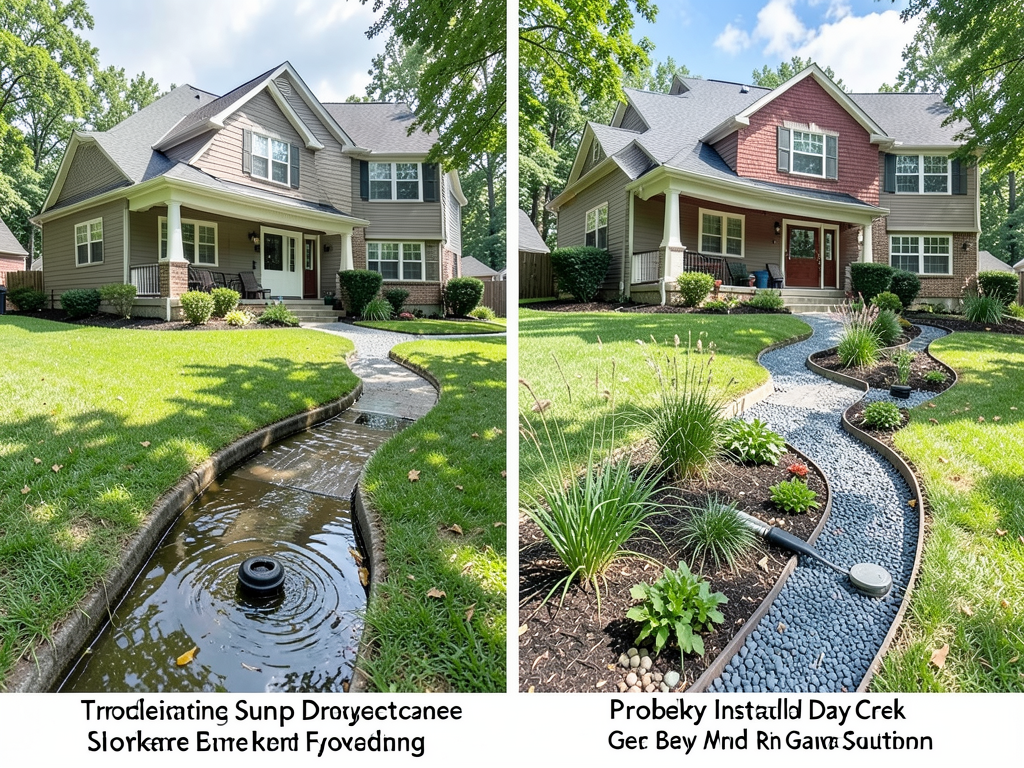
3. The ‘Dry Creek Bed’ Landscaping Approach
Dry creek beds provide an excellent middle ground between underground systems and surface discharge. These landscaped channels use river rock and boulders to create a natural-looking streambed that channels water away from your home while adding visual interest to your yard.
The key to success with dry creek beds lies in proper grading. The channel must slope away from your foundation at a minimum of 2% grade to ensure water flows rather than pools. The creek bed should terminate at least 20 feet from your property line to prevent water from reaching your neighbors.
Native Connecticut plants along the edges help stabilize the soil and absorb excess moisture. Consider incorporating a small bridge or stepping stones to make the feature accessible and enhance its aesthetic appeal.
4. Pop-Up Emitters for Seamless Lawn Integration
Pop-up emitters provide a simple yet effective solution for properties with adequate slope. These devices remain flush with your lawn when inactive but pop up under pressure to discharge water away from your foundation. When the pump shuts off, the emitter retracts and becomes nearly invisible.
The success of pop-up emitters depends on proper placement. They should be installed at least 10 feet from your foundation and positioned to take advantage of natural yard slopes. The discharge point must be at least 5 feet from any property line to prevent water from flowing onto neighbors’ land.
Winter protection is crucial for pop-up emitters in Farmington. Install an IceGuard or freeze-relief valve on the discharge pipe to prevent ice blockages that could cause basement flooding.
5. Rain Barrel Harvesting for Garden Use
Rain barrels connected to your sump pump discharge offer an eco-friendly solution that benefits both you and your neighbors. These systems collect water during wet periods and allow you to use it for garden irrigation during dry spells, reducing overall water consumption.
A typical Farmington home needs multiple rain barrels with a combined capacity of at least 100 gallons to handle peak discharge volumes. The barrels should include overflow outlets that direct excess water to a safe drainage area away from foundations and property lines.
This approach requires more maintenance than other solutions but provides the added benefit of free water for your garden. It also demonstrates environmental responsibility that your neighbors will appreciate.
Essential Winter Features: Preventing Frozen Discharge Lines
Connecticut’s harsh winters create unique challenges for sump pump discharge systems. When water freezes inside discharge pipes, it can create ice blockages that cause your pump to run continuously and eventually burn out. Worse, frozen water can back up into your basement, causing the very flooding you’re trying to prevent.
IceGuard or freeze-relief valves provide critical protection for Farmington homes. These devices allow water to escape through small openings if the main discharge pipe freezes, preventing pressure buildup that could damage your pump or plumbing system. Who to Call for 24 Hour Emergency Plumbing Help in East Hartford.
Proper pipe burial depth is essential for winter protection. In Hartford County, discharge pipes should be buried at least 48 inches below grade to remain below the frost line. This depth ensures that even during the coldest Connecticut winters, your discharge system continues to function properly.
Insulating exposed sections of discharge pipe provides additional protection. Use foam pipe insulation rated for outdoor use and secure it with weather-resistant tape. Pay special attention to areas where pipes pass through foundation walls, as these locations are particularly vulnerable to freezing.
Hartford County Plumbing Codes: Where Can Your Water Legally Go?
Understanding local regulations is crucial for selecting a compliant discharge route. The Connecticut State Building Code, based on the International Plumbing Code, requires that sump pump discharge must not create nuisance conditions on adjacent properties or public right-of-ways. International Plumbing Code.
Farmington’s specific requirements include maintaining a minimum distance of 5 feet from property lines for any surface discharge. Underground systems must include proper backflow prevention and cannot connect directly to municipal storm sewers without proper permits. Signs You Need Sewer Repair.
The Metropolitan District (MDC) regulates discharge into public storm drainage systems. Most residential sump pumps cannot discharge directly into these systems without special permits, as this can overwhelm municipal infrastructure during heavy rainfall events.
Local zoning ordinances may restrict the types of discharge systems allowed in certain neighborhoods, particularly historic districts where visual impact is a concern. Always check with the Farmington Building Department before installing any new discharge system.. Read more about Comparing Different Types of Sump Pump Switches for Better Flood Protection in Farmington.
Maintenance Checklist for Farmington Basements
Even the best-designed discharge system requires regular maintenance to function properly. Create a seasonal maintenance schedule to ensure your system protects your home year-round.
Spring maintenance should include checking for winter damage, clearing debris from discharge outlets, and testing your pump’s operation. Summer requires monitoring for clogs caused by leaves and grass clippings. Fall maintenance focuses on preparing for winter by insulating exposed pipes and checking for proper grading. Clearing Stubborn Clogs with Professional Drain Cleaning in Wethersfield.
Winter maintenance is critical in Farmington. Check discharge outlets weekly during freezing weather to ensure they remain clear of ice. Test your pump monthly to verify it activates properly when water levels rise.
Annual professional inspection can identify potential problems before they cause flooding. A qualified plumber should check pipe integrity, pump performance, and compliance with local codes during these inspections.
Cost-Benefit Analysis: Gravity vs. Pumped Discharge Systems
Understanding the costs involved helps you make informed decisions about your discharge system. Gravity-fed systems using French drains or dry creek beds typically cost between $1,500 and $4,000 to install, depending on the length and complexity of the system.
Pumped systems with pop-up emitters or underground piping generally range from $800 to $2,500. These systems cost less upfront but may require more maintenance and have shorter lifespans due to mechanical components.
The long-term costs of improper discharge can far exceed installation expenses. Flood damage to basements averages $5,000 to $10,000 per incident, while legal disputes with neighbors can cost thousands more in attorney fees and potential damages.
Consider the value of peace of mind and property protection when evaluating costs. A properly designed discharge system protects your home’s foundation, prevents mold growth, and maintains good relationships with neighbors.
Frequently Asked Questions
Can I discharge my sump pump directly into the street in Farmington?
No. Farmington regulations prohibit direct discharge into streets as it creates ice hazards and violates municipal codes. Water must be directed to appropriate drainage areas or underground systems.
How far from my property line should the discharge point be?
Local codes require a minimum of 5 feet from any property line for surface discharge. Underground systems should extend at least 10 feet from your foundation to prevent water from seeping back toward your home.
What happens if my neighbor complains about my sump pump discharge?
First, verify your system complies with local codes. If it does, document your compliance and offer to discuss solutions. If complaints persist, the town may require modifications. Proactive communication with neighbors often prevents disputes.
How can I tell if my discharge system is working properly?
Check for standing water near your foundation, ice buildup in winter, or soggy areas in your yard. Your pump should activate when water reaches the float switch level. If you notice any of these signs, your system may need adjustment or repair. Making the Switch to Tankless Water Heaters in Glastonbury.
Should I install a battery backup for my sump pump?
Yes. Power outages during storms are common in Connecticut, and a battery backup ensures your pump continues working when you need it most. This protection is especially important if you’re away from home during severe weather.
How deep should I bury my discharge pipe?
In Hartford County, bury discharge pipes at least 48 inches below grade to remain below the frost line. This depth prevents freezing during winter months and ensures year-round operation.
Can I connect my sump pump to my downspout drainage system?
Only if the combined system is properly designed to handle the additional flow. Most residential downspout systems cannot accommodate sump pump discharge volumes. Consult a professional plumber before combining these systems.
What type of pipe should I use for underground discharge?
Use Schedule 40 PVC pipe rated for underground use. Avoid flexible corrugated pipe as it can collapse under soil pressure and trap sediment. Ensure all connections are watertight to prevent groundwater infiltration.
How often should I test my sump pump discharge system?
Test your system monthly by pouring water into the sump pit until the pump activates. Check discharge outlets quarterly for clogs or damage. Perform a comprehensive system inspection annually with a professional plumber.
Will a rain garden really handle all my sump pump discharge?
A properly designed rain garden can handle typical discharge volumes, but extreme rainfall may exceed its capacity. Include an overflow outlet to direct excess water to a secondary drainage area. Size your rain garden based on your roof area and local rainfall patterns.
What should I do if my discharge pipe freezes?
Immediately check for IceGuard or freeze-relief valves that may be allowing water to escape. Never attempt to thaw frozen pipes with open flame. Contact a plumber to assess and repair any damage before the next rainfall event.
Are there any tax incentives for eco-friendly discharge solutions?
Connecticut offers some incentives for water conservation and stormwater management through various programs. Check with the Connecticut Department of Energy and Environmental Protection for current offerings. Some municipalities also provide rebates for rain barrels and rain gardens.
Ready to Protect Your Farmington Home and Neighborhood?
Don’t wait until the next heavy rain or rapid thaw causes flooding problems. The right sump pump discharge system protects your basement, preserves your property value, and maintains good relationships with your neighbors.
Call (860) 743-9699 today to schedule your inspection. Our Farmington plumbing experts will evaluate your current system, identify potential problems, and recommend solutions that comply with local codes while protecting both your home and your neighbors’ properties.
Pick up the phone and call (860) 743-9699 before the next storm hits. Your basement and your neighbors will thank you.

{
“@context”: “https://schema.org”,
“@type”: “BlogPosting”,
“headline”: “How to Select a Sump Pump Discharge Route That Does Not Flood Your Neighbors in Farmington”,
“description”: “Learn how to properly route sump pump discharge in Farmington to avoid flooding neighbors. Expert Hartford plumbing guide covers local codes, winter protection, and drainage solutions.”,
“wordCount”: 2307,
“datePublished”: “2026-05-07T08:33:00.000Z”,
“dateModified”: “2026-05-07T08:33:00.000Z”,
“inLanguage”: “en-US”,
“mainEntityOfPage”: {
“@type”: “WebPage”,
“@id”: “https://fivestarplumbinghartford.com”
},
“publisher”: {
“@type”: “LocalBusiness”,
“name”: “Five Star Plumbing Hartford”,
“url”: “https://fivestarplumbinghartford.com”
},
“author”: {
“@type”: “Organization”,
“name”: “Five Star Plumbing Hartford”,
“url”: “https://fivestarplumbinghartford.com”
},
“image”: {
“@type”: “ImageObject”,
“url”: “https://fivestarplumbinghartford.com/wp-content/uploads/2026/03/how-to-select-a-sump-pump-discharge-route-that-doe-1.png”
}
}
{
“@context”: “https://schema.org”,
“@type”: “Plumber”,
“name”: “Five Star Plumbing Hartford”,
“url”: “https://fivestarplumbinghartford.com”,
“address”: {
“@type”: “PostalAddress”,
“addressLocality”: “Hartford”
},
“areaServed”: {
“@type”: “City”,
“name”: “Hartford”
}
}
{
“@context”: “https://schema.org”,
“@type”: “FAQPage”,
“mainEntity”: [
{
“@type”: “Question”,
“name”: “Hartford County Plumbing Codes: Where Can Your Water Legally Go?”,
“acceptedAnswer”: {
“@type”: “Answer”,
“text”: “Understanding local regulations is crucial for selecting a compliant discharge route. The Connecticut State Building Code, based on the International Plumbing Code, requires that sump pump discharge must not create nuisance conditions on adjacent properties or public right-of-ways. International Plumbing Code.”
}
},
{
“@type”: “Question”,
“name”: “Can I discharge my sump pump directly into the street in Farmington?”,
“acceptedAnswer”: {
“@type”: “Answer”,
“text”: “No. Farmington regulations prohibit direct discharge into streets as it creates ice hazards and violates municipal codes. Water must be directed to appropriate drainage areas or underground systems.”
}
},
{
“@type”: “Question”,
“name”: “How far from my property line should the discharge point be?”,
“acceptedAnswer”: {
“@type”: “Answer”,
“text”: “Local codes require a minimum of 5 feet from any property line for surface discharge. Underground systems should extend at least 10 feet from your foundation to prevent water from seeping back toward your home.”
}
},
{
“@type”: “Question”,
“name”: “What happens if my neighbor complains about my sump pump discharge?”,
“acceptedAnswer”: {
“@type”: “Answer”,
“text”: “First, verify your system complies with local codes. If it does, document your compliance and offer to discuss solutions. If complaints persist, the town may require modifications. Proactive communication with neighbors often prevents disputes.”
}
},
{
“@type”: “Question”,
“name”: “Should I install a battery backup for my sump pump?”,
“acceptedAnswer”: {
“@type”: “Answer”,
“text”: “Yes. Power outages during storms are common in Connecticut, and a battery backup ensures your pump continues working when you need it most. This protection is especially important if you’re away from home during severe weather.”
}
},
{
“@type”: “Question”,
“name”: “How deep should I bury my discharge pipe?”,
“acceptedAnswer”: {
“@type”: “Answer”,
“text”: “In Hartford County, bury discharge pipes at least 48 inches below grade to remain below the frost line. This depth prevents freezing during winter months and ensures year-round operation.”
}
},
{
“@type”: “Question”,
“name”: “Can I connect my sump pump to my downspout drainage system?”,
“acceptedAnswer”: {
“@type”: “Answer”,
“text”: “Only if the combined system is properly designed to handle the additional flow. Most residential downspout systems cannot accommodate sump pump discharge volumes. Consult a professional plumber before combining these systems.”
}
},
{
“@type”: “Question”,
“name”: “What type of pipe should I use for underground discharge?”,
“acceptedAnswer”: {
“@type”: “Answer”,
“text”: “Use Schedule 40 PVC pipe rated for underground use. Avoid flexible corrugated pipe as it can collapse under soil pressure and trap sediment. Ensure all connections are watertight to prevent groundwater infiltration.”
}
},
{
“@type”: “Question”,
“name”: “How often should I test my sump pump discharge system?”,
“acceptedAnswer”: {
“@type”: “Answer”,
“text”: “Test your system monthly by pouring water into the sump pit until the pump activates. Check discharge outlets quarterly for clogs or damage. Perform a comprehensive system inspection annually with a professional plumber.”
}
},
{
“@type”: “Question”,
“name”: “Will a rain garden really handle all my sump pump discharge?”,
“acceptedAnswer”: {
“@type”: “Answer”,
“text”: “A properly designed rain garden can handle typical discharge volumes, but extreme rainfall may exceed its capacity. Include an overflow outlet to direct excess water to a secondary drainage area. Size your rain garden based on your roof area and local rainfall patterns.”
}
},
{
“@type”: “Question”,
“name”: “What should I do if my discharge pipe freezes?”,
“acceptedAnswer”: {
“@type”: “Answer”,
“text”: “Immediately check for IceGuard or freeze-relief valves that may be allowing water to escape. Never attempt to thaw frozen pipes with open flame. Contact a plumber to assess and repair any damage before the next rainfall event.”
}
},
{
“@type”: “Question”,
“name”: “Are there any tax incentives for eco-friendly discharge solutions?”,
“acceptedAnswer”: {
“@type”: “Answer”,
“text”: “Connecticut offers some incentives for water conservation and stormwater management through various programs. Check with the Connecticut Department of Energy and Environmental Protection for current offerings. Some municipalities also provide rebates for rain barrels and rain gardens.”
}
},
{
“@type”: “Question”,
“name”: “Ready to Protect Your Farmington Home and Neighborhood?”,
“acceptedAnswer”: {
“@type”: “Answer”,
“text”: “Don’t wait until the next heavy rain or rapid thaw causes flooding problems. The right sump pump discharge system protects your basement, preserves your property value, and maintains good relationships with your neighbors.”
}
}
]
}
{
“@context”: “https://schema.org”,
“@type”: “BreadcrumbList”,
“itemListElement”: [
{
“@type”: “ListItem”,
“position”: 1,
“name”: “Home”,
“item”: “https://fivestarplumbinghartford.com”
},
{
“@type”: “ListItem”,
“position”: 2,
“name”: “Blog”,
“item”: “https://fivestarplumbinghartford.com/blog”
},
{
“@type”: “ListItem”,
“position”: 3,
“name”: “How to Select a Sump Pump Discharge Route That Does Not Flood Your Neighbors in Farmington”
}
]
}
{
“@context”: “https://schema.org”,
“@type”: “Service”,
“serviceType”: “Plumbing”,
“provider”: {
“@type”: “LocalBusiness”,
“name”: “Five Star Plumbing Hartford”,
“url”: “https://fivestarplumbinghartford.com”
},
“areaServed”: {
“@type”: “City”,
“name”: “Hartford”
},
“description”: “Learn how to properly route sump pump discharge in Farmington to avoid flooding neighbors. Expert Hartford plumbing guide covers local codes, winter protection, and drainage solutions.”
}